Under the Banner of Islam
Turks, Kurds, and the Limits of Religious Unity
Format:Hardback
Publisher:Oxford University Press Inc
Published:31st Mar '21
Should be back in stock very soon
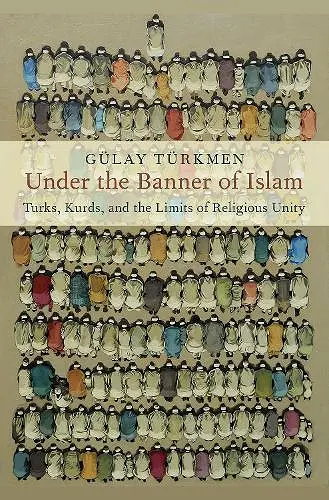
Sunni Islam has played an ambivalent role in Turkey's Kurdish conflict--both as a conflict resolution tool and as a tool of resistance. Under the Banner of Islam uses Turkey as a case study to understand how religious, ethnic, and national identities converge in ethnic conflicts between co-religionists. Gülay Türkmen asks a question that informs the way we understand religiously homogeneous ethnic conflicts today: Is it possible for religion to act as a resolution tool in these often-violent conflicts? In search for answers to this question, in Under the Banner of Islam, Türkmen journeys into the inner circles of religious elites from different backgrounds: non-state-appointed local Kurdish meles, state-appointed Kurdish and Turkish imams, heads of religious NGOs, and members of religious orders. Blending interview data with a detailed historical analysis that goes back as far as the nineteenth century, she argues that the strength of Turkish and Kurdish nationalisms, the symbiotic relationship between Turkey's religious and political fields, the religious elites' varying conceptualizations of religious and ethnic identities, and the recent political developments in the region (particularly in Syria) all contribute to the complex role religion plays in the Kurdish conflict in Turkey. Under the Banner of Islam is a specific story of religion, ethnicity, and nationalism in Turkey's Kurdish conflict, but it also tracks a broader narrative of how ethnic and religious identities are negotiated when resolving conflicts.
This is a good, concise account of the dilemma Turks and Kurds face in Turkey. Recommended. Advanced undergraduates through faculty. * R. W. Olson, University of Kentucky, CHOICE *
This is an excellent, exhaustive study of the main social problem of religious nationalism in contemporary Turkey. Türkmen beautifully reveals that the way the current Turkish government privileges religion alone in determining nationalbelonging will not work in the long term, because of the way it silences ethnicity in general and the sizeable Kurdish population in Turkey in particular. A must-read for all interested in religion, ethnicity, nationalism, and globalization. * Fatma Müge Göçek, Professor of Sociology and Women's Studies, University of Michigan *
Religious unity is often presented as a panacea for violent ethnic conflict among Muslim groups. In this well-researched, conceptually innovative, and theoretically engaging book, Türkmen shows how a suprareligious approach fails to take deep sociological root and to offer a resolution to the Kurdish question in Turkey. Her in-depth interviews with both Kurdish and Turkish religious elites reveal how religious beliefs actually serve as the cement of distinct ethnic identities rather than superseding them. Her book is an important contribution to Kurdish studies and politics of religion and ethnicity literature. * Güneş Murat Tezcür, Jalal Talabani Chair of Kurdish Political Studies, University of Central Florida *
Through her analysis of the discourse of Kurdish and Turkish religious personalities on Islam, ethnicity, and nationalism, Gülay Türkmen sheds significant new light on hitherto neglected but important aspects of the Kurdish conflict and the Islamic revival in Turkey. * Martin van Bruinessen, Professor of the Comparative Study of Contemporary Muslim Societies, Utrecht University *
The book's literary flair, which adds an engaging dimension to its content, cannot be ignored. The ability to present its remarkable academic depth in a fluent and compelling manner is the other striking feature of the book. * GüneŠAkkurt Kılıç, Journal of Religion in Europe *
ISBN: 9780197511817
Dimensions: 155mm x 239mm x 23mm
Weight: 431g
204 pages