Thoughtful Data
A Guide to Empathy and Equity in Data Communication
Jonathan Schwabish author Alice Feng author
Format:Hardback
Publisher:Columbia University Press
Publishing:29th Dec '26
£117.00
This title is due to be published on 29th December, and will be despatched as soon as possible.
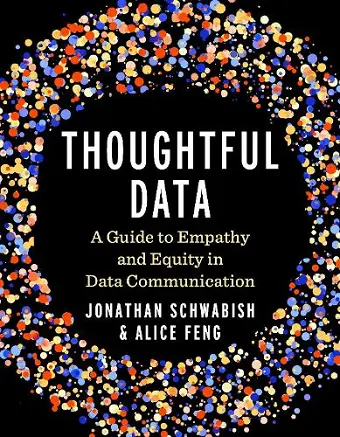
Data shape how we understand the world—and how the world treats people. Yet data are never neutral. From redlining maps that entrenched racial segregation to charts that quietly reinforce stereotypes, the ways data are collected, analyzed, and visualized can produce real and lasting harm.
Thoughtful Data is a guide to practicing data work ethically, empathetically, and inclusively. Drawing on interviews with nearly 150 experts across research, journalism, design, data science, and policy, Jonathan Schwabish and Alice Feng argue that foregrounding equity is not at odds with rigor but is essential to it. They invite readers to reconsider the everyday decisions embedded in data projects—from language choices and category definitions to visual defaults and framing—and to reflect on how those decisions affect the people represented in the data and those who consume it.
Thoughtful Data provides a framework for critical thinking and intentional practice across the full data lifecycle: collection, analysis, and communication. It situates data visualization within broader debates about equity, trust, power, and accountability while remaining practical and accessible to nonspecialists. This book equips readers with the tools to recognize bias, question defaults, engage communities, and communicate in ways that respect human dignity—helping ensure that data are used not just accurately but responsibly.
Thoughtful Data is an essential book for the present moment, making the case that empathy can lead to impact—and, crucially, showing us how. Through interviews, examples, and expert advice, Schwabish and Feng provide us with the tools—and the inspiration—to make change in the world. -- Lauren Klein, author of Data by Design: Visualization and Power from Abolition to the Dawn of Data Science
Numbers and data may seem neutral, but Schwabish and Feng argue convincingly that they aren’t always—and how they are presented, displayed, and charted influences the stories they tell. This book is eye-opening, provocative, and persuasive. -- David Wessel, director of the Hutchins Center on Fiscal and Monetary Policy at the Brookings Institution
A comprehensive starter for anyone looking to practice data with humanity and respect. This guide asks deep and reflective questions while also offering practical but not limiting advice on how to think about data and ethics. It is the resource I wish I’d had when I started my career. -- Pei Ying Loh, cofounder of Kontinentalist
Drawing on interviews with people in the field, Thoughtful Data provides a comprehensive look at data equity communication. This book offers actionable guidance to practitioners, funders, designers, educators, and others in the data visualization community. -- Catherine D'Ignazio, author of Counting Feminicide: Data Feminism in Action
Schwabish and Feng have bottled decades of hard-earned wisdom into a practical guide to thoughtfully designing data visualization. An antidote to the misuse of the data our nation runs on. -- Denice Ross, former US chief data scientist
Designing a visualization is never a neutral act of representation of data, but an act by someone (the designer), about something or someone (measured through the data), and for someone (the reader) in a particular context. This tetradic understanding of visualization has many ethical implications; for example, the designer ought to act in the best interest of the reader; moreover, the designer needs to consider what or who is being measured and represented, who is not, and in which ways that representation happens or fails to happen. This book is an excellent guide to this type of ethical reasoning, which I believe is crucial to modern design practice. -- Alberto Cairo, author of The Art of Insight: How Great Visualization Designers Think
ISBN: 9780231220941
Dimensions: unknown
Weight: unknown
312 pages