Diaspora in the Countryside
Two Mennonite Communities and Mid-Twentieth-Century Rural Disjuncture
Format:Paperback
Publisher:University of Illinois Press
Published:27th Nov '06
Should be back in stock very soon
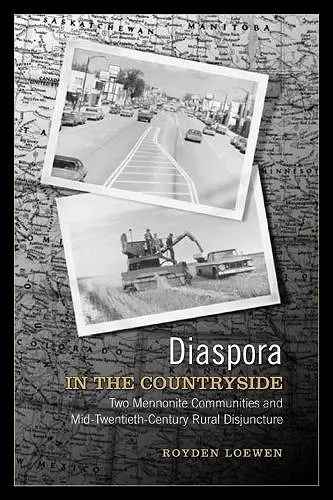
Rural families' strategies for coping with a world in transition
From the 1930s to the 1980s, the North American countryside faced a profound cultural transformation as rural society became fragmented and dispersed. This work examines the phenomenon of rural fragmentation by contrasting two closely related but geographically distant Low German Mennonite communities in Kansas and Manitoba.
From the 1930s to the 1980s, the North American countryside faced a profound cultural transformation as rural society became fragmented and dispersed. Nowhere was this more true than among close-knit, ethnoreligious communities such as the Mennonites. Farm families were required to accept new levels of automation and science, while those unwilling or unable to make these changes migrated to nearby towns or regional cities. Some escaped the transformation in new isolated rural places. These relocations and the cultural reformulation that resulted saw the emergence of an extraordinary diaspora of rural people.
In Diaspora in the Countryside, Royden Loewen examines the phenomenon of rural fragmentation by contrasting two closely related but geographically distant Low German Mennonite communities in Kansas and Manitoba. He systematically compares their responses to the "Great Disjuncture," as well as the changes undergone by their farm families versus those of their kin in the nearby towns and the cities of Denver and Winnipeg, and a conservative group that moved to rural British Honduras.
"A rich cultural history that tells a compelling story of how change came to southern Manitoba Mennonites in the 1940s, 50s, and 60s."--Great Plains Quarterly
ISBN: 9780252074257
Dimensions: 229mm x 152mm x 25mm
Weight: 540g
384 pages