The Generation of Plays
Yoruba Popular Life in Theater
Format:Paperback
Publisher:Indiana University Press
Published:21st Mar '03
Currently unavailable, and unfortunately no date known when it will be back
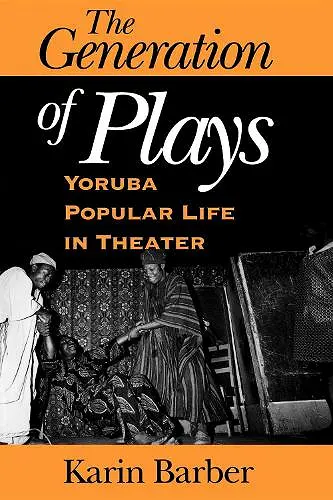
Details the dynamic role of Nigerian popular theatre Winner of the 2001 Herskovits Award
From the 1940s to the 1980s, Yoruba popular theatre was one of the most spectacularly successful theatres in Africa. This title recounts the history of the Odin Adejo Theatre Company. It uncovers the pulse points of generation, production, and improvisation that merge when a Yoruba popular dram is brought to the stage.
NEW CATALOG COPY (announcing paperback edition):
In The Generation of Plays, Karin Barber recounts the history of the Odin Adéjobi Theater Company and uncovers the pulse points of generation, production, and improvisation that merge when a Yorùbá popular drama is brought to the stage. This rich and detailed book opens a window into the social and cultural worlds of actors and audiences.
ORIGINAL CATALOG COPY:
"Karin Barber has given us a vivid picture of one of the most vital forms of modern African popular art. It is beautifully written and informed by a deep affection for the subject . . . . a major contribution to the cultural history of Nigeria." —J. D. Y. Peel
From the 1940s to the 1980s, Yoruba popular theater was one of the most spectacularly successful theaters in Africa. Today, these traveling companies have virtually disappeared, largely as a result of economic hardship and the rise of video entertainment. In The Generation of Plays, Karin Barber recounts the history of the Oyin Adejobi Theatre company. Drawing on archival sources as well as extensive interviews and transcriptions of plays, Barber uncovers the pulse points of generation, production, and improvisation that merge when a Yoruba popular drama is brought to the stage. Barber reveals the personalities of the principal actors, how plays are created—from the germ of an idea through the logistics of rehearsal and staging—how a play is made meaningful to its audience, and how a play changes and develops after several productions or according to the sensibilities of its viewers. The expansion of popular drama into television is also considered. This rich and detailed narrative illuminates notions of gender, language, politics, and self as they are expressed in popular cultural forms. It affords a unique view of the social and cultural perspectives of the actors and audiences involved in what was a flourishing and vital enterprise.
"During the decade of huge oil revenues (c.1975–85), scores of Yorùbá (Yoruba) troupes produced popular theater throughout southwestern Nigeria. As one element of a more general cultural efflorescence, performances entertained people in genres and language of their own choosing. Plays addressed such issues as far-reaching transformations unleashed by cash-crop farming, urbanization, [and] wage labor derived from increasing globalization, yet through popular theater, these same issues could be understood for their deeply local impacts. Barber has been an innovative leader in studies of African popular culture, and here she joins a small cadre of scholars (notably led by Johannes Fabian) in investigating culturally and historically particular expressive forms as examples of dramatic genres increasingly found throughout the continent. Using an engaging narrative style, Barber tracks the career of Oyin Adéjobí (Adejobi) , an actor, producer, and fascinating character in his own right. She details how actors were selected and trained, how plays were developed, how shows were gotten on the road, and who their audiences were. Barber is at her best in situating popular theater in contemporary culture, as Yorùbá (Yoruba) seek to understand the complex and competing demands of their evolving circumstances. Graduate students and faculty.November 2001"—A. F. Roberts, University of California, Los Angeles
ISBN: 9780253216175
Dimensions: unknown
Weight: 626g
504 pages