Health and Safety Impacts of Aircraft Cabin Temperatures
National Academies of Sciences, Engineering, and Medicine author Transportation Research Board author Center for Health, People, and Places author Biomedical and Health Sciences Program Area author Committee on Health and Safety Impacts of Aircraft Cabin Temperatures author David H Wegman editor Autumn Downey editor
Format:Paperback
Publisher:National Academies Press
Published:24th Aug '26
Should be back in stock very soon
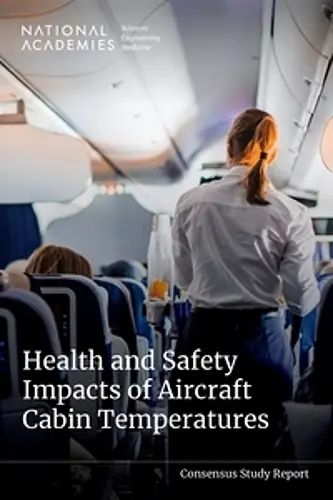
Commercial aircraft cabins expose passengers and flight attendants to a range of environmental conditions, including at times excessively hot or cold temperatures that may affect health, safety, and comfort. While aircraft systems are generally effective at maintaining acceptable cabin conditions, challenges are more likely to arise during ground operations, particularly in extreme outdoor temperatures or when equipment used for thermal control in aircraft cabins is unavailable or not functioning properly. Because passengers and flight attendants have limited ability to leave or substantially modify the cabin environment, understanding and managing temperature-related risks is an important component of safe air travel.
Health and Safety Impacts of Aircraft Cabin Temperatures examines the available evidence on how cabin temperatures and humidity conditions may influence physiological, cognitive, and behavioral outcomes for passengers and flight attendants. The report finds that serious health impacts are uncommon, but conditions causing thermal discomfort may occur more frequently and can affect factors critical to the conduct of flight attendant duties (e.g., concentration, decision-making) and passenger behavior in ways that create safety concerns. The report highlights differences in how passengers and flight attendants experience cabin temperatures because of variations in activity levels, clothing constraints, exposure frequency, age, and underlying health conditions. It also concludes that available data on cabin temperature and humidity conditions are fragmented and insufficient to reliably estimate the frequency of related health and safety events.
The report provides recommendations to strengthen management of cabin temperature risks, including integrating temperature and humidity hazards into airline safety management systems, improving collection and use of aviation safety and health event data, strengthening operational practices for thermal control in aircraft cabins, supporting flight attendants in responding to unsafe conditions, and providing passengers with information about temperature-related risks. The report also recommends that the Federal Aviation Administration establish a research program to systematically collect representative data on cabin temperature and humidity conditions to better inform future mitigation strategies and safety oversight.
ISBN: 9780309607360
Dimensions: unknown
Weight: unknown
310 pages