Ecumenism, Christian Origins and the Practice of Communion
Format:Hardback
Publisher:Cambridge University Press
Currently unavailable, and unfortunately no date known when it will be back
This hardback is available in another edition too:
- Paperback£40.00(9780521090537)
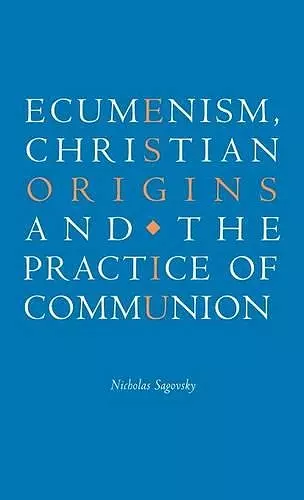
This book, first published in 2000, examines the significance of the theology of communion in the continuing practice of ecumenism.
This book examines the significance of the theology of communion for contemporary ecumenical theology, tracing the development of contemporary understanding in critical engagement with the thoughts of Plato, Aristotle, the Hebrew Scriptures, the New Testament, the Cappadocian Fathers, and Augustine, and offers pointers for the continuing work of the ecumenical movement.The theology of communion, or Koinonia, has been at the centre of the ecumenical movement for more than thirty years. It is central to the self-understanding of the Anglican, Roman Catholic and Orthodox Churches, and has been prominent in the work of the World Council of Churches. This book, based on the 1996 Hulsean Lectures, examines the significance of Koinonia for contemporary ecumenical theology, tracing the development of contemporary understanding in critical engagement with the thoughts of Plato, Aristotle, the Hebrew Scriptures, the New Testament, the Cappadocian Fathers and Augustine. In each case, reflection on community life is related to actual communities in which texts were produced. The importance of conflict and the place of politics for the Koinonia that constitutes the Christian churches is a major theme throughout. Communion is seen as a gift to be received and a discipline to be cultivated in the continuing practice of ecumenism.
Review of the hardback: 'A must for those interested in the visible unity of the Church.' Theology
Review of the hardback: 'Rigorous, honest and passionate: qualities that make this a timely book in ecumenical theology as well as a good one.' The Expository Times
ISBN: 9780521772693
Dimensions: 216mm x 140mm x 17mm
Weight: 450g
232 pages