The Creation of Psychopharmacology
Format:Paperback
Publisher:Harvard University Press
Published:15th Oct '04
Currently unavailable, and unfortunately no date known when it will be back
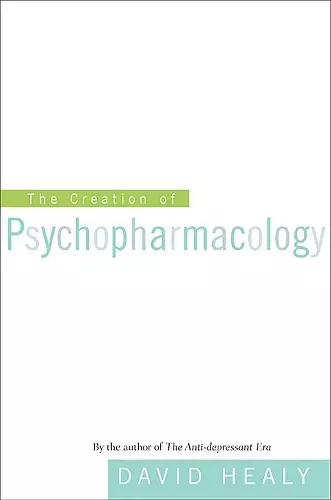
David Healy is one of the founding historians of psychopharmacology, first with his three-volume series of interviews with the first generation of psychopharmacologists, and secondly with his brilliant book, The Antidepressant Era. Now Healy crowns these achievements with this breathtakingly original and important history of the antipsychotics, psychiatry's flagship drugs. In their short lifespan they have revolutionalized psychiatry, converting it from a medical specialty based on psychotherapy to one based on biochemistry. Yet as Healy's analysis shows, commerce has been as influential as science in this transformation--perhaps more so. For its originality, readability, and wisdom, The Creation of Psychopharmacology is the most important contribution to the history of psychiatry since Ellenberger's The Discovery of the Unconscious. -- Edward Shorter, University of Toronto, author of A History of Psychiatry: From the Era of the Asylum to the Age of Prozac
Healy follows The Antidepressant Era with an even more ambitious and dramatic story: the discovery and development of antipsychotic medication. Once pharmaceutical companies recognized their commercial potential, financial as well as clinical pressures drove the development of ever more aggressively marketed medications.
David Healy follows his widely praised study, The Antidepressant Era, with an even more ambitious and dramatic story: the discovery and development of antipsychotic medication. Healy argues that the discovery of chlorpromazine (more generally known as Thorazine) is as significant in the history of medicine as the discovery of penicillin, reminding readers of the worldwide prevalence of insanity within living memory.
But Healy tells not of the triumph of science but of a stream of fruitful accidents, of technological discovery leading neuroscientific research, of fierce professional competition and the backlash of the antipsychiatry movement of the 1960s. A chemical treatment was developed for one purpose, and as long as some theoretical rationale could be found, doctors administered it to the insane patients in their care to see if it would help. Sometimes it did, dramatically. Why these treatments worked, Healy argues provocatively, was, and often still is, a mystery. Nonetheless, such discoveries made and unmade academic reputations and inspired intense politicking for the Nobel Prize.
Once pharmaceutical companies recognized the commercial potential of antipsychotic medications, financial as well as clinical pressures drove the development of ever more aggressively marketed medications. With verve and immense learning, Healy tells a story with surprising implications in a book that will become the leading scholarly work on its compelling subject.
David Healy is one of the founding historians of psychopharmacology, first with his three-volume series of interviews with the first generation of psychopharmacologists, and secondly with his brilliant book, The Antidepressant Era. Now Healy crowns these achievements with this breathtakingly original and important history of the antipsychotics, psychiatry's flagship drugs. In their short lifespan they have revolutionalized psychiatry, converting it from a medical specialty based on psychotherapy to one based on biochemistry. Yet as Healy's analysis shows, commerce has been as influential as science in this transformation--perhaps more so. For its originality, readability, and wisdom, The Creation of Psychopharmacology is the most important contribution to the history of psychiatry since Ellenberger's The Discovery of the Unconscious. -- Edward Shorter, University of Toronto, author of A History of Psychiatry: From the Era of the Asylum to the Age of Prozac
[T]his sweeping history of medicine used to treat mental illness takes on the psychiatric and medical establishment...Healy does groundbreaking work...The Creation of Psychopharmacology details how psychiatric medication intersects with academic squabbles and popular culture. -- Janice Paskey * Chronicle of Higher Education *
David Healy is a respected historian of psychiatry who has written a book that should spark a major debate. He identifies current trends towards the abandonment of independent research into treatments for mental illness, the demand for Randomised Control Trials as the only acceptable measure of whether a treatment works, and the chilling control pharmaceutical companies now exert over psychiatry...This is an important and thought-provoking book...Healy's warning that, without a debate, we may be moving into an era when cosmetic psychiatry will be the new liposuction is worth heeding. -- Julie Wheelwright * The Independent *
This book is a good place to start if you want to get an overview of the role of drugs in the treatment of mental illness...[Healy] capture[s] an important current dilemma. -- Richard Restak * Washington Times *
Psychiatrists and historians owe a debt to David Healy. Over the years he has conducted interviews with all the leading figures in psychopharmacology...Drawing on these interviews and his wide reading of the scholarly literature, Healy has now constructed a subtle and compelling narrative of the development of psychotropic drugs...Healy ambitiously relates the emergence of drugs to the wider culture and shows how the two have interacted...[He] has written a highly stimulating and original book, which is brimful of ideas and deserves to be read and debated throughout the psychiatric community and beyond. -- Allan Beveridge * British Journal of Psychiatry *
[N]o one has described it more thoroughly, or elucidated the critical intersections between psychiatry and the pharmaceutical industry more clearly. -- Morgan T. Sammons * Contemporary Psychology *
- Nominated for Pfizer Award 2004
ISBN: 9780674015999
Dimensions: 229mm x 152mm x 32mm
Weight: 522g
480 pages