Czechoslovakia and the Czech Republic in World Politics
Ladislav Cabada author Šárka Waisová author
Format:Hardback
Publisher:Bloomsbury Publishing PLC
Published:16th Dec '11
Currently unavailable, and unfortunately no date known when it will be back
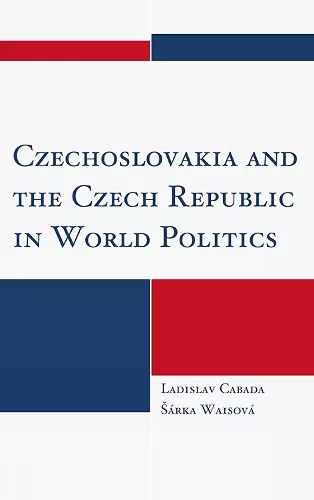
The book focuses on the description and analysis of the historical formation of the Czechoslovak and Czech positions in the international system during the course of the 20th century. The first part of the book presents a brief outline of the history of Czechoslovak foreign policy between the First World War and the end of the Cold War. The authors focus on the key periods and turning points in the role of the small Central European state in the international system as well as on the significant actors formulating Czechoslovak foreign policy from the inside and influencing it from the outside. The second, analytical part of the book focuses on the key issues connected to the change of the position of Czechoslovakia and the Czech Republic after 1993 in world politics, and on the formulation of Czech foreign policy priorities and strategies in the globalized world after the end of bipolar confrontation. The authors analytically investigate the activities of the Czech Republic in (Central) European regional integration processes and the integration of the state in the global system of development cooperation. A great deal of attention is paid to the key political actors of the Czech foreign policy discussion and their impact on the formulation of foreign policy goals. Special attention is paid to the dilemmas of Czech foreign policy: the hesitation between the role of a small state and a medium power and also the span of Czech foreign policy between Atlanticism, anti-Americanism and Europeanization.
Political scientists Cabada and Waisová have authored a book that centers on forces, events, and issues long addressed by scholars: Austrian imperial rule over the Czechs up to WW I; the interwar period marked by growing political instability in then independent Czechoslovakia against the backdrop of fascism menacing Europe; Nazi Germany's absorption of the Czech lands and its domination of nominally independent Slovakia; Soviet hegemony in Eastern and Central Europe (including the reconstituted Czechoslovakia) from the end of WW II until the dissolution of the Soviet empire and the Soviet Union itself, marking the end of the Cold War; and the post-Cold War period to the present, with the Czechs and Slovaks split apart once again and their two sovereignties incorporated into the EU and NATO. This anguishing history has shaped Czech perspectives and actions in the international sphere. Czech foreign policy continues to evoke the principal lesson drawn from Jaroslav Ha^Dvsek's great novel The Good Soldier Schweik: be compliant, not overtly rebellious in the face of insurmountable external pressures and threats. The book will appeal mostly to specialists on Czech and central European affairs. Summing Up: Recommended. Graduate and professional collections. * CHOICE *
Written by distinguished experts in the field, this book offers rich and correct information as well as a deep understanding of history and the contemporary position, priorities, and ways of Czechoslovak and Czech foreign policy since the birth of Czechoslovakia from the First World War to present times. Clear in the structure, comprehensive in the scope, accessible in the style and, detailed in analysis, this book is a must for any reader who would like to get solid knowledge and orientation not only in Czech foreign policy but also in the broader context of Central European international relations in the present and recent past. -- Vit Houek, Masaryk University, Czech Republic
Cabada and Waisová create a great mixture of historical and chronologically arranged chapters and sections that are thematically organized. They provide a valuable and interesting contribution based on a unique Czech perspective and they remind us of the value of a single-country book. Cabada and Waisová skillfully navigate the terrain of showing their true colors and at the same time, providing a good model to follow for works anchored in non-globally-western, non-globally-northern perspectives. -- Melinda Kovács, Sam Houston State University
ISBN: 9780739167335
Dimensions: 240mm x 163mm x 21mm
Weight: 513g
242 pages