Allegory and Violence
Format:Hardback
Publisher:Cornell University Press
Published:15th Jan '97
Currently unavailable, and unfortunately no date known when it will be back
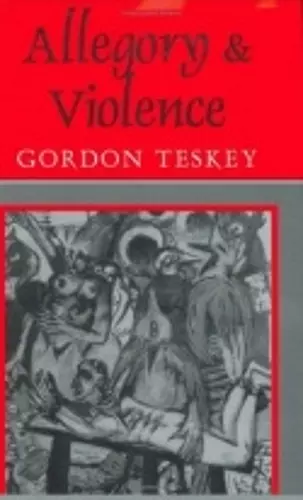
The only form of monumental artistic expression practiced from antiquity to the Enlightenment, allegory evolved to its fullest complexity in Dante's Commedia and Spenser's Faerie Queene. Drawing on a wide range of literary, visual, and critical works in the European tradition, Gordon Teskey provides both a literary history of allegory and a theoretical account of the genre which confronts fundamental questions about the violence inherent in cultural forms.Approaching allegory as the site of intense ideological struggle, Teskey argues that the desire to raise temporal experience to ever higher levels of abstraction cannot be realized fully but rather creates a "rift" that allegory attempts to conceal. After examining the emergence of allegorical violence from the gendered metaphors of classical idealism, Teskey describes its amplification when an essentially theological form of expression was politicized in the Renaissance by the introduction of the classical gods, a process leading to the replacement of allegory by political satire and cartoons. He explores the relationship between rhetorical voice and forms of indirect speech (such as irony) and investigates the corporeal emblematics of violence in authors as different as Machiavelli and Yeats. He considers the large organizing theories of culture, particularly those of Eliot and Frye, which take the place in the modern world of earlier allegorical visions. Concluding with a discussion of the Mutabilitie Cantos, Teskey describes Spenser's metaphysical allegory, which is deconstructed by its own invocation of genealogical struggle, as a prophetic vision and a form of warning.
"Teskey mingles much learnedness with some of the most powerful analysis to which allegory has ever been subjected. It is a rich brew, but entirely rewarding. . . . Teskey has written a remarkable work."—Angus Fletcher, Modern Language Quarterly
"Gordon Teskey's truly remarkable book . . . inhabits as much as it unfolds the work of allegory. One crucial thing this book confronts is that the theory of allegory tends to be so relentlessly allegorical, projecting images of its own work that are by turns purificatory and obscene, images which may conceal or idealize the violence by which allegory works, and yet reveal its scope all the more powerfully by virtue of such displacement. . . . A book so alive to, and solicitous of, its own intellectual obsessions is rare. The author does not yield to any intellectual demands that he has not made his own—an unusual virtue in the current climate of criticism."—Kenneth Gross, Spenser Newsletter
"Reading this book, like reading an allegory, is as much a psychological as an intellectual experience. It disarms the critic prepared to challenge the details of its monumental argument, but not by dismissing contradiction and confrontation. Rather, it celebrates them as the inescapable essense of human life."—Judith Rice Henderson, Canadian Review of Comparative Literature
ISBN: 9780801429958
Dimensions: 229mm x 152mm x 22mm
Weight: 907g
280 pages