The Religion of Life
Eugenics, Race, and Catholicism in Chile
Format:Hardback
Publisher:University of Pittsburgh Press
Published:28th May '22
Should be back in stock very soon
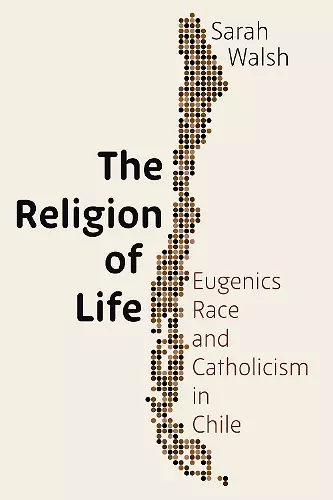
Shows How Catholicism Played a Central Role in the Development of a Scientific Understanding of Race, National Identity, and Human Difference in Chile
Examines the interconnections and relationship between Catholicism and eugenics in early-twentieth-century Chile.The Religion of Life examines the interconnections and relationship between Catholicism and eugenics in early-twentieth-century Chile. Specifically, it demonstrates that the popularity of eugenic science was not diminished by the influence of Catholicism there. In fact, both eugenics and Catholicism worked together to construct the concept of a unique Chilean race, la raza chilena. A major factor that facilitated this conceptual overlap was a generalized belief among historical actors that male and female gender roles were biologically determined and therefore essential to a functioning society. As the first English-language study of eugenics in Chile, The Religion of Life surveys a wide variety of different materials (periodicals, newspapers, medical theses, and monographs) produced by Catholic and secular intellectuals from the first half of the twentieth century. What emerges from this examination is not only a more complex rendering of the relationship between religion and science, but also the development of White supremacist logics in a Latin American context.
There is no doubt that Walsh's book is a big contribution and its publication is fully justified since it fills a gap in Chilean historiography and opens spaces for future research. For those interested in Chilean history, inside and outside the country, this is a text that makes a valuable contribution to the history of Chile in the twentieth century.
* Journal of Latin American Studies *An indispensable contribution to the scholarship on race and eugenics in the Americas. Through an insightful and accessible analysis of hundreds of medical and Catholic sources from Chile, Walsh succeeds in identifying common patterns and themes that reveal the pervasiveness of eugenic logic among Chile’s intellectuals and their collective investment in whiteness and patriarchy. By tracking the symbiotic relation between Catholicism and science and the influence of sexology and sexuality studies on eugenics, Walsh also offers fresh directions for further historical work on eugenics in Latin America.
* Isis *The Religion of Life challenges us to rethink what we mean when we talk about ‘race,’ ‘whiteness,’ and ‘eugenics,’ showing us the interpretive flexibility of these categories, along with their various proxies. It greatly enriches our understanding of the distinctiveness and difference of racial thought and practice in Latin America and the Global South. Surprisingly, the racialized reproductive politics revealed here were nourished by both science and religion. In thus specifying local racial formations, this book will make antiracism far more targeted and effective.
-- Warwick Anderson, author of The Cultivation of Whiteness: Science, Health, and Racial Destiny in AustraliaIn her highly original The Religion of Life, Sarah Walsh offers a nuanced and previously unknown history of how Catholicism, along with racial and gender ideologies, influenced the Chilean version of eugenics in the twentieth century. As Walsh’s study vividly shows, secular and Catholic eugenicists agreed that a modernized patriarchy, based on traditional gender roles and carefully channeled sexual desire, would protect the nation’s racial health and claim to Whiteness. Combining excavation of Catholic influence on eugenics, with careful analysis of ideologies of race and gender, The Religion of Life analyses how, for a broad range of Chileans from across the political and religious spectrum, eugenics interventions and ideology offered urgent solutions to perceived threats to the ‘Chilean race.’
-- Patience Schell, University of AberdeenThis work is a strong contribution to the history of science in Latin America, centering on Chilean actors in eugenic science rather than on North Atlantic narratives and perceptions. Anyone interested in race and eugenics in Latin America, particularly in relation to the creation and perpetuation of national identities, would benefit from reading Walsh’s work.
-- Aimee Dávila Hisey, Oregon State UniverISBN: 9780822946649
Dimensions: unknown
Weight: unknown
238 pages