The City in the Shadow of the Shantytown
A Critical History of the Bidonville
Format:Hardback
Publisher:University of Pittsburgh Press
Publishing:8th Sep '26
£96.95
This title is due to be published on 8th September, and will be despatched as soon as possible.
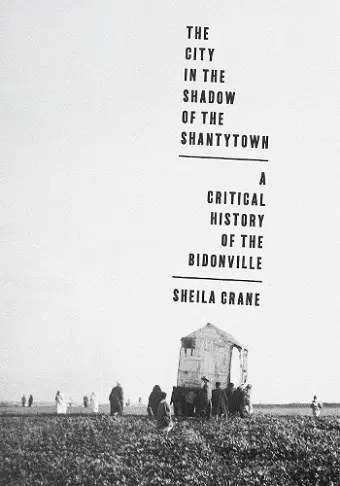
Illuminates How North African Communities Reshaped Spaces Defined by Colonial Power
Architects, politicians, and planners have repeatedly framed shantytowns or slums as aberrant, unplanned developments that stand apart from the city proper, rather than integral components of the urban landscape with their own layered histories and often unrealized potentials. Describing a site as a bidonville––the francophone equivalent of the shantytown––positioned it as a foil to and catalyst for new architectural projects, anticipating and authorizing its targeting, control, and dispossession. In this richly illustrated study, Sheila Crane charts the emergence of the bidonville, a term first consolidated in Casablanca following the establishment of the French Protectorate of Morocco in 1912 that was subsequently used to categorize and systematically target urban areas across Morocco, Algeria, and beyond—processes that continue to shape planning and urban landscapes today. Tracing significant episodes that extend into the post-independence period, Crane reveals how the bidonville became a potent artifact of the colonial city and a formative site for anticolonial thinking and action. Far from self-contained enclosures, sites deemed bidonvilles were shaped by dynamic human and non-human entanglements central to this book.
The City in the Shadow of the Shantytown offers a deeply researched account of urban informality at the center of colonial city-making. Sheila Crane’s brilliant analysis reframes bidonvilles, or shantytowns, as politically charged urban forms embedded in the global circuits and ecological disruptions of capital. This is architectural history at its best, and a much-needed corrective to global urban studies’ longstanding dehistoricization of informality.
-- Kenny Cupers, University of BaselSheila Crane significantly changes the established narrative about bidonvilles in French-speaking North Africa by tracing their growth and habitation during the transformation of Ottoman land laws into French property regimes. Rather than criminalizing the bidonvillesas unplanned slums or romanticizing them with the euphemism of informal cities, she discusses these built landscapes both as an urban corollary of plantation during French colonization and as places of anti-colonial resistance. She weaves their history with the iconic but understudied housing environments, as well as the concept of autogestion and autoconstruction during the independence struggles.
-- Esra Akcan, Cornell UniversitySheila Crane artfully dissects the concept and materiality of bidonvilles in French-ruled North Africa. The City in the Shadow of the Shantytown reveals that commonly accepted vocabularies of colonialism, architecture, urbanism, and race mask kaleidoscopic interactions among language, policies, laws, cultural practices, and environments over the decades since France commandeered the region. Crane’s study is inherently engaging and offers significant lessons for the study of colonial landscapes everywhere.
-- Dell Upton, University of California, Los AngISBN: 9780822948926
Dimensions: unknown
Weight: unknown
384 pages