Capturing the spoor rock art of Limpopo
An exploration of the rock art of Northern most South Africa
Ed Eastwood author Eastwood Cathelijne author
Format:Book
Publisher:New Africa Books (Pty) Ltd
Published:2nd Apr '07
Currently unavailable, and unfortunately no date known when it will be back
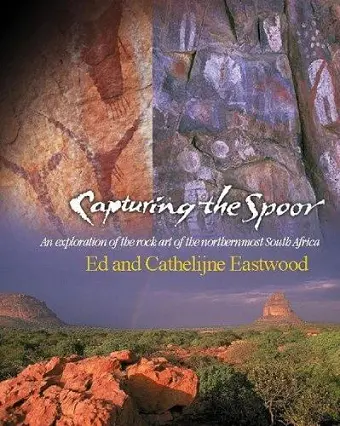
Capturing the Spoor describes and discusses the virtually unknown rock art of the northernmost reaches of South Africa, in the area of the Central Limpopo Basin. The title of the book comes from the belief held by some traditional Bantu-speakers that the San can capture animal spoor and bewitch it in order to ensure hunting success. The authors use this as an analogy for understanding the behavior of people in the past through the traces they leave behind. This book describes the work of four distinct cultural groups: the San; Khoekhoen (Khoikhoin or Hottentots ), Venda and Northern Sotho, and, most recently, people of European descent. Further, it discusses the interaction and connection between the four groups. It is the first substantial body of work from South Africa to focus on an area outside the Drakensberg, which has become synonymous with southern African rock art . Although the book focuses on a specific region, it introduces anthropological information from the Cape to the greater Kalahari region. The text is interspersed with first-hand accounts of Kalahari and Okavango San beliefs and rites and discussions with traditional Bantu-speaking peoples. A distillation of 14 years of field surveying and research in the Central Limpopo Basin, it targets the general reader who would like to know more about southern Africa s rock art traditions, but at the same time addresses many academic concerns. A simple narrative line and copious endnotes, respectively, ensure that both lay and academic readers will find the subject interesting. The text is abundantly illustrated with line drawings and expressed through photographs. A list of rock art sites in Limpopo that are open to the public will be included. This is a rare publication where information that is collected is analyzed with the help of knowledge and experience accumulated by the local indigenous communities, whose have been seldom heard in this context before.
Presenting a survey of the Central Limpopo Basin, this title comes from the belief held by some traditional Bantu-speakers that the San can 'capture' animal spoor and bewitch it in order to ensure hunting success. It describes the work of four distinct cultural groups: the San, Khoekhoen, Venda and Northern Sotho, and people of European descent.
Infused with the passion of the authors for their subject, this is the first book of its kind to discuss the rock art of cultural groups other than the San. It carries the story of the rock engravings and rock paintings of Limpopo into the present by describing the work of four distinct cultural groups: the San; Khoekhoen (Khoikhoin or 'Hottentots'); Venda and Northern Sotho, and, most recently, people of European descent.
Between Polokwane and Alldays in northwest Limpopo lies the little-known Makgabeng plateau, home to billion-year-old hillsides that protect a wealth of San, Khoi, and Northern Sotho rock art. However, this unique heritage is under threat from mining.
"In the night, on the hill, while the grown-ups slept and the children lay listening to the sounds that only darkness brings, the leopard ran quiet as a secret, down the stone path through the wooden gateposts that gave off the sharp odour of bitumen, and between the rows of lettuces and spinach where a vegetable garden grew neatly in the damp soil and the air held the fragrance of mint and parsley. Passing the boundaries of the garden she followed a footpath that lead through a thicket of poplars and wild wattles, and upwards towards the top of the hill. Beyond that, the mountain rose through the mists, the back of a sleeping monolith turned against the night sky and the moon. From a granite ledge on the mountain she had a wide view of the farmlands and the gum tree forests, the white house on the hill and the green valley they called Ezulwini, the Place of Heaven."
ISBN: 9780864866790
Dimensions: 250mm x 250mm x 15mm
Weight: 500g
156 pages