The Slavic Letters of St. Jerome
The History of the Legend and Its Legacy, or, How the Translator of the Vulgate Became an Apostle of the Slavs
Format:Hardback
Publisher:Cornell University Press
Published:30th Sep '14
Currently unavailable, and unfortunately no date known when it will be back
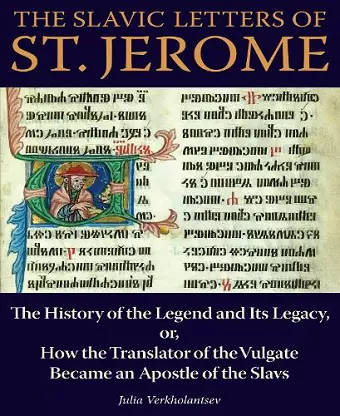
The Slavic Letters of St. Jerome is the first book-length study of the medieval legend that Church Father and biblical translator St. Jerome was a Slav who invented the Slavic (Glagolitic) alphabet and Roman Slavonic rite. Julia Verkholantsev locates the roots of this belief among the Latin clergy in Dalmatia in the 13th century and describes in fascinating detail how Slavic leaders subsequently appropriated it to further their own political agendas.
The Slavic language, written in Jerome's alphabet and endorsed by his authority, gained the unique privilege in the Western Church of being the only language other than Latin, Greek, and Hebrew acceptable for use in the liturgy. Such privilege, confirmed repeatedly by the popes, resulted in the creation of narratives about the distinguished historical mission of the Slavs and became a possible means for bridging the divide between the Orthodox and Catholic Churches in the Slavic-speaking lands.
In the fourteenth century the legend spread from Dalmatia to Bohemia and Poland, where Glagolitic monasteries were established to honor the Apostle of the Slavs Jerome and the rite and letters he created. The myth of Jerome's apostolate among the Slavs gained many supporters among the learned and spread far and wide, reaching Italy, Spain, Switzerland, and England.
Grounded in extensive archival research, Verkholantsev examines the sources and trajectory of the legend of Jerome's Slavic fellowship within a wider context of European historical and theological thought. This unique volume will appeal to medievalists, Slavicists, scholars of religion, those interested in saints' cults, and specialists of philology.
The author traces the story of St. Jerome and his letters by means of still existing glagolitic books or manuscripts, through dedication letters and foundation charters, and through certain people like Charles IV or John of Neumarkt who commissioned Slavonic books... this method of using texts to write a history can only be recommended.
(The Russian Review)Verkholantsev's inclusive approach and the geographical span of her study offer invaluable depth and texture to the religious history of Western Slavic areas under Roman Catholic jurisdiction, namely Croatia, Bohemia, Silesia and Poland.... Verkholantsev's thorough analysis, based on an impressive bibliography, is a solid contribution to a subject often caught up in competing nationalistic claims.
(The Medieval Review)In a fascinating niche work that combines historiography, multiculturalism, hagiography, and linguistics, Verkholantsev charts the history of an idea-the myth of Jerome's role as author of Slavic Christianity-by means of documentary and linguistic analysis of primary sources drawn from Slavic culture.
(Choice)This well-researched, original, and accessible book... will prove to be an indispensable contribution and excellent addition to scholarly work available in English on many aspects of medieval and Renaissance Slavic culture.
(The Catholic Historical Review)In this handsomely produced and illustrated volume, Verkholantsev weaves the intriguing story of medieval historical interpretations, misinterpretations and downright myths crafted by lowly Croatian Glagolite Benedictine monks known as glagoljasi and taken up by none other than the Holy Roman Emperor Charles IV himself, resulting in the revival of the Glagolitic script in the 13th century and contributing to its survival well into the 1900s.
(Journal of Croatian Stud- Winner of Early Slavic Studies Association Book Prize 2015 (United States)
ISBN: 9780875804859
Dimensions: 254mm x 178mm x 24mm
Weight: 907g
280 pages