How Economic Ideas Evolve
The Impact of Religion on the German and Italian Welfare State
Format:Hardback
Publisher:Cambridge University Press
Published:10th Jul '25
Should be back in stock very soon
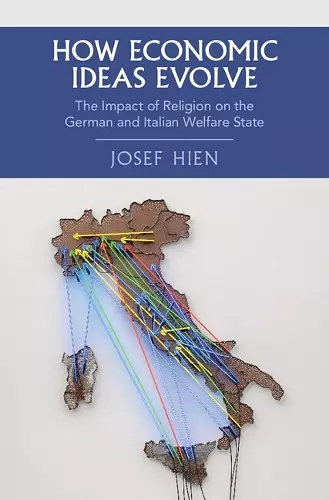
This book examines the substantial influence of religious ideas in shaping European welfare states and political economies.
This book demonstrates the link between religious ideas and the diverging development of economies and welfare states in Europe. The work provides an analysis of the contextual factors that steered religious development and expands historical sociology by focusing on religious ideas and their long-term developmental trajectories in politics.How Economic Ideas Evolve offers a unique perspective on the development of political economies in Europe. With three major contributions, the book first establishes a link between religious, social, and economic ideas and the diverging development of political economies in Europe. Secondly, the work provides a historical sociological analysis of the contextual factors that influenced the development of religiously inspired socio-economic ideas. Chapters examine the impact of these ideas on economic and welfare institutions in Germany and Italy over three centuries. Lastly, the book goes beyond classic historical sociology to focus on the long-term developmental trajectories and impact of ideas on politics and policy. Thorough and expansive, How Economic Ideas Evolve contributes to the emerging scholarship of ideational historical sociology, broadening the toolkit of historical sociology to research the development and impact of socio-economic ideas and ideologies over long periods of time.
'Most scholars of the welfare state give short shrift to the notion that ideas matter for the evolution of welfare states, let alone religious ideas. Hien changes that with his definitive account of how religious ideas and electoral competition interact to create distinct pathways of welfare state evolution. A major piece of scholarship. If you asked most welfare state scholars why Germany was able to reform its male breadwinner model of welfare provision in the early 2000s while Italy was not, they would likely reach for employer preferences, demographic changes, and skill formation needs. Hien, in contrast, shows us that with reunification, the long exiled East German Protestants re-entered the electoral fray, transforming the German welfare state, and economy, in the process. A critical intervention and reinvigoration of the debate.' Mark Blyth, The William R. Rhodes '57 Professor of International Economics, Brown University
ISBN: 9781009569262
Dimensions: unknown
Weight: unknown
204 pages