Modernism, Existentialism, and the Aesthetics of the Postcolony
Format:Paperback
Publisher:Cambridge University Press
Publishing:20th Aug '26
£32.00
This title is due to be published on 20th August, and will be despatched as soon as possible.
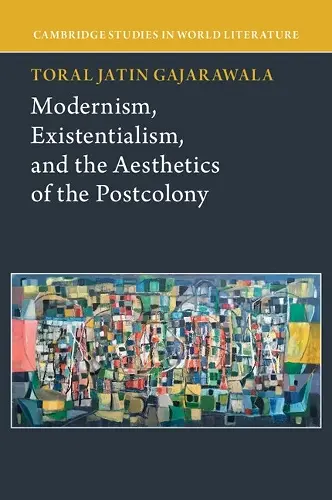
This non-fiction paperback, "Modernism, Existentialism, and the Aesthetics of the Postcolony" from Toral Jatin Gajarawala, is due to be published 20th August 2026 by Cambridge University Press.
'Strange Light is a field-changing account of collagist, interdisciplinary, and multimedial existentialisms that emerged across South Asia in Cold War conditions of the 1960s and 70s. It reveals such existentialisms as an occluded outlook of estrangement that challenges composite visions of identity endorsed by anticolonial nation-states, no less than visions of solidarity and commitment supported by the anticolonial left. In a series of dazzling literary-philosophical excurses through underexplored archives and entangled texts, Gajarawala presents postcolonial existentialism as the formal and aesthetic dimension of postcolonial modernism, and as a secret history of late-postcoloniality in general.' Leela Gandhi, John Hawkes Professor of Humanities and English, Brown University
'Challenging the narrative of postcolonial modernism in South Asia's rhetoric of political commitment and 'nation-building,' Toral Jatin Gajarawala presents a deeply studied, alternative perspective through the history of existentialism in the subcontinent, how it radically reshaped the subcontinent's intellectual and artistic landscape. Through an unconventional yet exciting constellation of artists and writers-including Pakistani painter Sadequain (illustrator of Camus's The Stranger), Hindi poet Agyeya, Bangladeshi absurdist playwrights, and the minimalist Indian modern artist Nasreen Mohamedi-Gajarawala shows how the aesthetic realm became the essential laboratory for working out a postcolonial subjectivity that looked beyond nationalist narratives when confronting the self. Modernism, Existentialism, and the Aesthetics of the Postcolony is a vital intervention that re-maps the intellectual geography of the postcolony, arguing that its deepest engagements with freedom were not merely political but profoundly existential.' Anjali Nerlekar, Associate Professor, Rutgers University and Co-editor, Modernism/modernity
'This remarkable monograph makes a bold intervention in postcolonial and world literary studies by uncovering a forgotten constellation of existentialist thought within South Asian modernism. Moving across national and medial boundaries, it links writers and artists from India, Pakistan, and Bangladesh to reveal a shared vocabulary of interiority, abstraction, alienation and freedom - one that challenges conventional postcolonial paradigms. Written with elegance and an essayistic style, the book pairs conceptual rigor with revelatory close-readings of overlooked works and archives - from Sadequain's haunting lithographs for L'Etranger to Agyeya's experimental fiction and Fanon's little-read play L'oeil se noie. The result is a luminous, deeply original study that opens new avenues for thinking about the aesthetics of the postcolony.' Laetitia Zecchini, Research Director at the CNRS, CNRS-University of Chicago
'In this bold and illuminating study of South Asian modernism, Toral Gajarawala offers a transformative rethinking of postcolonial Indian aesthetics. In the place of narratives of triumphant nationalism that sought to provincialize Europe, she uncovers a far more unsettling and generative moment of postcolonial existential reckoning-a world reforged under the strange light of decolonization that illuminates uncertainties, self-estrangement, and fractured interiorities. Gajarawala takes us into the Fanonian inner worlds of disenchanted artists and writers confronting the broken promises of independence, grappling with alienation, caste, displacement and exile, searching for new practices of freedom and self-recognition through their restless experiments with aesthetic form. Modernism, existentialism, and the Aesthetics of the Postcolony reshapes our understanding of the postcolonial condition itself.' Robert JC Young, FBA, Julius Silver Professor, Professor of English and Comparative Literature, New York University
'Informed by a deft combination of theoretical depth and a broad historical sense, this book is an original and thought-provoking meditation on the emergence and transformation of a postcolonial aesthetic after decolonization. Focusing on the complicated relation between late modernism and an emergent postcolonial aesthetic, and working with an extensive archive Gajarawala weaves a web of literary and artistic connections between Europe and South Asia that are rarely encountered in English Studies or Comparative Literature. A remarkable aspect of the book is the author's focus on postcolonial writers as key agents in the transformation of modernism, her ability to work with multiple genres including poetry, painting, and film, and an enviable mastery of multiple languages. The book will be essential reading for scholars keen to understand the aesthetic that emerged when European existentialism, a dying colonialism, and postcolonial disenchantment encountered each other.' Simon Gikandi, Professor of English, Princeton University
ISBN: 9781009697033
Dimensions: unknown
Weight: unknown
300 pages