Technocrats in Turmoil
The Fed, the ECB, and the Changing Politics of Money
Format:Paperback
Publisher:Cambridge University Press
Published:19th Feb '26
Currently unavailable, and unfortunately no date known when it will be back
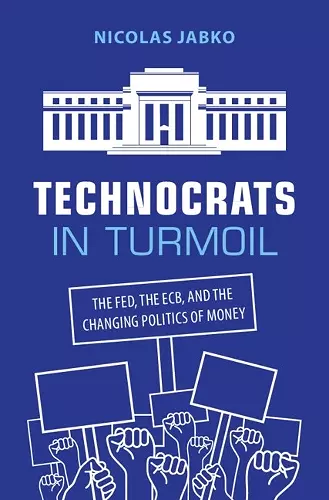
Jabko explains the waxing and waning of neoliberalism in terms of changing alliances between central bankers, economists, and politicians.
Technocrats in Turmoil shows how central bankers allied with conservative forces to fight inflation in the 1980s, and disassociated from these forces after 2008. Nicolas Jabko thus explains the waxing and the waning of technocratic neoliberalism in terms of changing alliances between central bankers, economists, and politicians.As the economy became more financialized, the politics of money considerably changed after the late 1970s. American and European central bankers first allied with conservative forces to fight inflation in the 1980s; then, that alliance unravelled after the 2008 financial crisis. Many observers gloss over this change because they see central bankers either as stewards of financialization, or as economists dedicated to economic stability. Nicolas Jabko shows how changing alliances between central bankers, economists, and politicians led to momentous shifts in monetary regimes. He argues that central bankers are technocrats who navigate and powerfully shape three overlapping arenas – their own internal monetary policy committees; the economics profession; and the broader public arena. Steeped in a machine-assisted analysis of central bank archives, Technocrats in Turmoil thus reveals the key role that the Fed and the ECB played in the waxing and waning of technocratic neoliberalism.
'Monetary orthodoxies are not set in stone. In times of crisis, technocrats need to adjust their beliefs – sometimes much faster than they ever imagined. This will happen again. A great book, a must-read.' Thomas Piketty, Paris School of Economics
'A brilliant guide to the strange politics born from the Great Financial Crisis. Drawing on untapped central bank archives, Jabko reveals how every appearance of consensus masks fierce internal battles – and how history moves in staggers, not smooth waves.' Quinn Slobodian, Boston University
'This book examines why central bankers, once the darlings of New Right politicians, have come under attack from conservatives. Jabko's insightful analysis of monetary technocrats is a must-read for scholars of political economy, history and economics interested in understanding the changing shape of economic power today.' Jacqueline Best, University of Ottawa
'Jabko locates the politics of money at the intersection of central banking, economics, and everyday political debate. That approach transforms the Fed and the ECB from impenetrable facades for power into three-dimensional spaces of decision. A path-breaking study that redefines neoliberalism and its change over time.' Christine Desan, Harvard Law School
'Nicolas Jabko's compelling new book shows how independent central bankers at the Federal Reserve and the European Central Bank changed tactics dramatically after adopting neoliberal austerity to tame inflation in the 1980s. Jabko tells the story through central bankers' internal deliberations, with both a riveting narrative and rigorous machine learning. A tour de force!' Frank Dobbin, Harvard University
ISBN: 9781009727457
Dimensions: 229mm x 152mm x 15mm
Weight: 418g
248 pages