Bioremediation of Environmental Toxicants
Toxicants, Sources, Mechanism, Impact on Human Health, and Bioremediation Approaches
Chandra Shekhar Yadav editor Mahipal Singh Sankhla editor Kumud Kant Awasthi editor
Format:Hardback
Publisher:Taylor & Francis Ltd
Published:6th Dec '24
Currently unavailable, and unfortunately no date known when it will be back
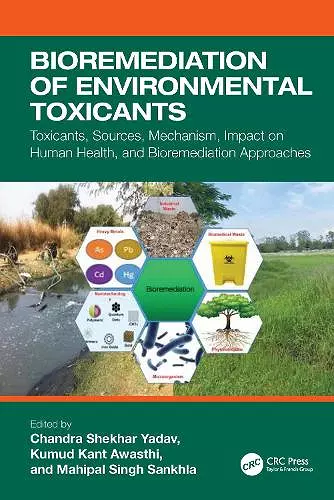
Bioremediation of Environmental Toxicants: Toxicants, Sources, Mechanism, Impact on Human Health, and Bioremediation Approaches provides insight into the nature of environmental toxicants, the impact on human health, and their bioremediation approaches, viz. nanotechnology, microorganism, and phytoremediation. Various environmental toxicants such as pesticides, heavy metals, plastic and microplastic waste, dyes used in industries, colorants, corrosive agents, and biomedical waste show different levels of mechanism of toxicity, possessing a significant threat to human health as well as the stability of ecosystems. To decontaminate the environment from these toxic compounds a low-cost effective technique is required. Bioremediation is a sustainable approach by which hazardous pollutants are converted into less harmful or non-toxic compounds using effective techniques to detoxify contaminated soil and water. In recent years, research has steadily concentrated on the various bioremediation approaches, viz. nanoparticle, microorganism, and phytoremediation.
KEY FEATURES
- Showcases contributions from high-profile experts in the field
- Highlights the current state and importance of environmental bioremediation
- Provides detailed knowledge about the mechanism, toxicity, and action of environmental toxicants
- Furnishes a deep understanding of environment–human interaction and the after effects
- Outlines the state-of-the-art bioremediation technologies, viz. nanotechnology, microbial- and plant-based mitigation of environmental toxicants <
ISBN: 9781032315263
Dimensions: unknown
Weight: 453g
302 pages