Bolivia and the Making of the Global Indigenous Movement
Anthropology, Development and Transnationalism
Format:Hardback
Publisher:Taylor & Francis Ltd
Published:30th Oct '24
Currently unavailable, and unfortunately no date known when it will be back
This hardback is available in another edition too:
- Paperback£47.99(9781032578767)
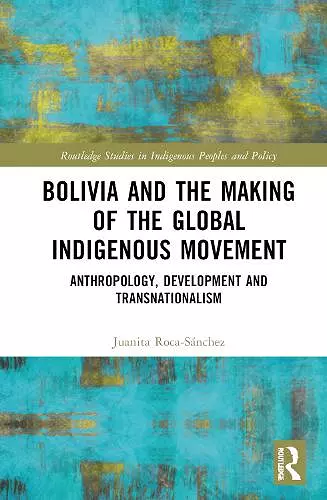
This book investigates how western anthropological trends, development discourse and transnational activism came to create and define the global indigenous movement.
Using Bolivia as a case study, the author demonstrates through historical research and a multi-sited ethnography of international aid agencies, how international ideas of what it means and does not mean to be indigenous have played out at the national level. Tracing these trends from pre-revolutionary Bolivia, the Inter-American indigenismo in the 1940s up to Evo Morales’ downfall, the book reflects on Bolivia’s national-level policy discourse and constitutional changes, but also asks to what extent these principles have been transmitted to the country’s grassroots organisations and movements such as “Indianismo”, “Katarismo”, “CSUTCB” and “CIDOB”. Overall, the book argues that indigeneity can only be adequately understood, as a longue durée anthropological, political, and legal construction, crafted within broader geopolitical contexts. Within this context, the classical dichotomy between “indigenous” and “whites” should be challenged, in favour of a more nuanced understanding of plural indigeneities.
This book will be of interest to researchers from across the fields of global studies, political anthropology, history of anthropology, international development, socio-legal studies, Latin American history, and indigenous studies.
ISBN: 9781032578705
Dimensions: unknown
Weight: 770g
314 pages