Sacred Ecology
Learning from Indigenous Knowledge and Stewardship
Format:Paperback
Publisher:Taylor & Francis Ltd
Published:17th Mar '26
Should be back in stock very soon
This paperback is available in another edition too:
- Hardback£171.99(9781032753133)
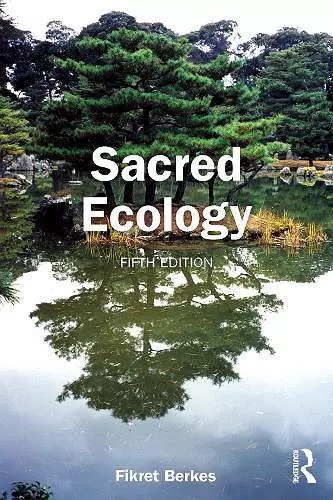
Sacred Ecology examines knowledge held by Indigenous peoples and local communities around the world, and asks how we can learn from this body of knowledge and practice. Berkes explores the importance of Indigenous ways of knowing as a complement to ecology and environmental science, and its cultural and political significance for traditional peoples themselves. With updates of relevant web links and over 300 new references, this fifth edition provides increased voice for Indigenous authors and contains much new material, including a new chapter.
Sacred Ecology has become the book to go to for understanding the deep cultural relationship between traditional people (especially North American Indian people) and their environments. I have successfully used the book in undergraduate and graduate classes. Students learn easily from the many useful cases. Simply outstanding.
Richard W. Stoffle, School of Anthropology, University of Arizona
Berkes’ interdisciplinary approach to understanding traditional ecological knowledge is unique, rigorous, and applicable. Without romanticizing or patronizing local and Indigenous societies, Sacred Ecology honors diverse voices and delivers insightful responses to emerging environmental concerns.
Paul Faulstich, Professor of Environmental Analysis, Pitzer College
Each new edition of this book deepens and broadens insights into traditional ecological knowledge, including how such knowledges are crucial to our continued survival as a species. The wisdoms of indigenous ways of knowing have an able and sensitive collaborator in Fikret Berkes. This book provides the central text in my undergraduate Anthropology and Environment course. It never fails to engage students, open new ways of thinking, and inspire all of us to the difficult, important work of re-thinking our human place in relation to the other-than-human persons with whom we have the fortune and responsibility of co-existing.
David Syring, Associate Professor of Anthropology, University of Minnesota, Duluth and Co-Editor-in-Chief of Anthropology and Humanism
In this age of the urgency of climate change, Berkes’ book is more than timely. Teaching courses in environmental anthropology, I have come to value Sacred Ecology as a text that helps students grapple with the complexities and importance of TEK. His inclusion in this edition of more indigenous voices is particularly valuable, especially in light of the struggles of Native peoples around the world (the resistance against the Dakota Access Pipeline being a critical case in point). I appreciate the ways in which Berkes integrates scientific and traditional ecological knowledge, effectively demonstrating the ways in which these forms of knowledge complement each other and validating the need for interdisciplinary research to deal with climate change and environmental problems.
Sue Darlington, Professor of Anthropology and Asian Studies, Hampshire College
For years I have used Sacred Ecology as a primary text for my course in Indigenous Knowledge and Sustainable Development, and the book, especially the exhaustive sections on Cree worldview and ecological practices, has been universally appreciated by graduate and undergraduate students. Berkes’ critical purpose of delineating an environmental, science-compatible understanding of indigenous knowledge remains the same, however, this edition of Sacred Ecology brings crucial improvements and updates to this important text, especially in accurately reflecting the depth of research on traditional ecological knowledge that has been undertaken by indigenous scholars. I will gratefully continue to use Sacred Ecology as a key text.
Claudia J. Ford, Lecturer, Rhode Island School of Design
ISBN: 9781032703701
Dimensions: unknown
Weight: 710g
362 pages
5th edition