Mothers, Children and Domestic Violence and Abuse
A Tale of Poverty and Inequality Told Through Survey Data
Format:Hardback
Publisher:Taylor & Francis Ltd
Published:16th Dec '25
Currently unavailable, and unfortunately no date known when it will be back
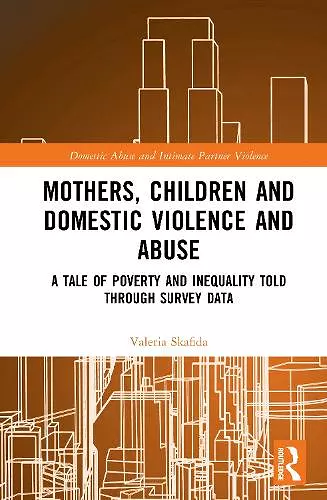
This monograph explores the lives of mothers and children living with domestic violence and abuse.
This title initially focuses on issues around methods, measurement and reflexive accounts of researching domestic abuse through survey data. Our knowledge and understanding of domestic violence and abuse experiences across the population are only as good as the data we collect. The book examines legacy surveys which still influence today’s data landscape globally, it critically examines the data currently being collected in the UK context, and queries who is missing in the survey data we collect. It also engages with important questions around how can we talk about perpetrators of violence and abuse when we mostly have data on victims. The book then takes a deep-dive into what a cohort study tells us about social inequalities in mothers’ experiences of domestic abuse, focusing on how overlapping aspects of poverty and disadvantage place mothers and children in vulnerable situations. Domestic abuse experiences have obvious repercussions for mothers, while there are also repercussions for children, which this book explores, by looking at children’s physical chastisement and children’s social and emotional development in the context of living with parental domestic violence and abuse.
Ending with a discussion around what appropriate policy responses need to consider, both in terms of services targeted directly at domestic violence and abuse victims, survivors and perpetrators, as well as broader policy responses which could seek to address the high levels of poverty and inequality which families, and particularly women and children, face in the UK. It will be of interest to all scholars, students and professionals working within social policy, social work, domestic violence and sociology, and those using quantitative methodological approaches in this space.
Increased understanding of the scale and ubiquity of domestic violence and abuse has strengthened policy and practice internationally and across the UK, however large-scale data that captures the experiences of mothers and children remains scarce. Valeria Skafida’s incisive and comprehensive discussion of survey methods and findings exposes the thinking and assumptions that have shaped our knowledge; she challenges us to answer such questions as: ‘How do I put those who perpetrate abuse back in the narrative?’ and to recognise how structural factors, particularly poverty, intersect with families’ experiences of domestic violence and abuse. This book is essential reading for all those studying, researching or working in the field of domestic violence and abuse. The clarity and accessibility of the discussion of survey methods will be appreciated by anyone wanting to strengthen their grasp of quantitative research.
Nicky Stanley, Emerita Professor of Social WorkUniversity of Lancashire
ISBN: 9781032712215
Dimensions: unknown
Weight: 520g
174 pages