Adaptive Reuse of Roman Catholic Churches
Good Practice and Viable Solutions for Converting Sacred Spaces
Format:Hardback
Publisher:Taylor & Francis Ltd
Published:18th Mar '26
Currently unavailable, and unfortunately no date known when it will be back
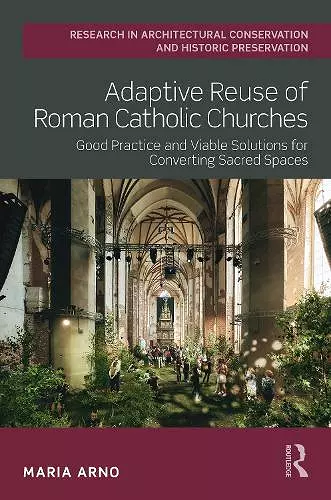
This book examines the adaptive reuse of Roman Catholic churches through twenty-five case studies from Poland, Germany, the Netherlands, and Belgium. It addresses the complex intersection of theology, heritage conservation, and contemporary social needs and explores how sacred spaces can serve new secular purposes while preserving their spiritual, historical, and cultural significance.
Integrating historical, theological, architectural, and policy perspectives, this book traces the historical evolution of church reuse, the impact of secularization, and the ethical responsibilities of architects, alongside the conservation principles that shape sacred heritage management. Theological reflections address ecclesiastical spatial symbolism, canon law, profanation, and episcopal guidelines in the selected countries. Comparative national profiles analyze religious demographics, church infrastructure, and property stewardship. Case studies illustrate diverse reuse models – from liturgical continuity to radical transformation – across cultural, social, commercial, residential, and interfaith contexts. The conclusions synthesize the findings, offering strategies that balance heritage preservation with contemporary functional needs.
This publication is aimed at architects, historians, art theorists, architecture researchers, conservators, priests, and the managers of these buildings, as well as enthusiasts of sacred architecture who care deeply about its future, as this book is intentionally multi-layered and multi-dimensional.
“The issue of repurposing decommissioned churches is a complex challenge, as it touches on sensitive aspects not only from a theological standpoint, but also from social and economic perspectives. Maria Arno’s book serves as a valuable resource for professionals and scholars seeking both theoretical insight and practical guidance. The historical perspective helps to temper the sense of urgency, while the design perspective aids in evaluating concrete implementations.”
Andrea Longhi, Full Professor of History of Architecture at the Politecnico di Torino and a member of the ICOMOS–PRERICO Italian Committee. He advised the Pontifical Council for Culture on research and the implementation of the Guidelines for the Decommissioning and Ecclesial Reuse of Churches (2018).
ISBN: 9781032883007
Dimensions: unknown
Weight: 610g
242 pages