Co-production in Youth Justice
Samantha Burns editor Sean Creaney editor
Format:Paperback
Publisher:Taylor & Francis Ltd
Published:26th Jun '26
Should be back in stock very soon
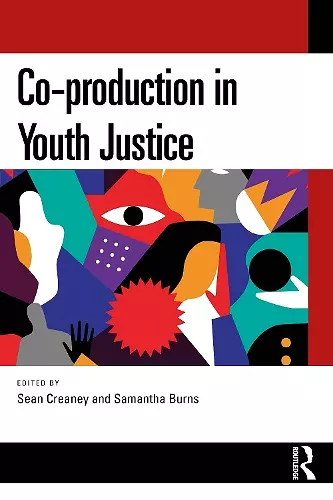
Co-production in Youth Justice offers both theoretical contributions and empirical evidence to shed light on the extent and nature of participatory and engaging practices within the field of youth justice.
Examining co-production initiatives from different youth justice systems, this book demonstrates how co-production connects with lived experience, trauma-informed practice, creative research methods, and child-friendly practices. It illustrates new ways of viewing and working with children and young people in conflict with the law, including the extent to which they can influence youth justice systems. It also offers new insight into under researched areas, such as creative co-production with Black and Mixed heritage children, and child-friendly forms of co-production within the context of Violence Reduction Partnerships.
Co-production in Youth Justice is an important new resource for students and scholars within criminology and criminal justice, as well as professionals working within youth justice services, relevant charities, and inspectorates.
“This book is a really important resource, demonstrating how ideas of participation and co-creation can be brought to life in work with young people, and especially with those who are marginalised or made the subject of intrusive justice interventions. This is a powerful call to anyone involved in youth justice, and the wider domain of practice associated with it, to recognise the necessity of building partnerships and alliances with young people, so that they can take the lead in shaping their own future. Giving them a stake in decision-making, and choice in determining outcomes lies at the heart of this collection, and it is inspiring to see so many examples of positive action to achieve these ends explored and demonstrated here. This book deserves to become established as a benchmark for good practice.”
Roger Smith, Emeritus Professor of Social Work at Durham University
“In 1999, the Youth Justice Board introduced a brand new, trailblazing assessment tool – Asset – which was designed as a means of gathering information to provide youth justice practitioners with a clear indication of the types of intervention necessary to help a young person lead a law-abiding life. Firmly embedded within the Asset documentation package was an innovative, child-friendly self-assessment tool entitled ‘What Do YOU Think?’ to be completed by the young person. This form intended to give young people an explicit opportunity to state their views; ensure that the assessment took their views into account; highlight issues that they were worried about; and to facilitate a comparison between the practitioner’s assessment and the young person’s own perspective. Ultimately, the form attempted to engineer a process of engaging with the young person, to assist in developing a relationship with them, helping them to see that practitioners are genuinely interested in their views. However, what the Asset omitted to include was any sense of eliciting ideas of collaborative endeavours between the young people and their supervising practitioners or any attempts to co-construct tailored intervention practices.
Asset was superseded some 18 years later by the remodelled, dynamic and iterative process of assessment entitled AssetPlus. This document thoughtfully contains a young person’s self-assessment section which provides greater opportunity for them to reflect on their offence, focus on their perception of the consequences of their offending and an emphasis on future aspirations and identifying steps needed to achieve them. Here, we moved a step closer to granting young people agency by alluding to the possibility that they may input their own ideas concerning improving their life chances. Notwithstanding, the overarching narrative surrounding Assetplus is its specific focus on the use of practitioners’ professional judgement to achieve the best outcomes for young people, thus stifling young people’s voices in terms of their expressive involvement in decision making over their future.
Creaney and Burns’ groundbreaking text has achieved the remarkable pioneering feat of bridging this gap. Their absolute focus on the inclusion of young people as equal partners in the generation of positive youth justice practices has taken us closer still to the contemporary emphasis on ‘Child First’ principles. In this book, the authors and their contributors explain lucidly the benefits of co-constructed praxes and demonstrate unequivocably how the co-production of participatory rights-based approaches can be achieved. Remaining true to their stance on this concept, the authors and contributors have welcomed and included young people’s voices and narratives concerning their lived experiences of co-production in action, hence actively un-silencing their voices. One can only hope that the authors’ forward-thinking concepts and ideas are embraced by the Youth Justice Board, helping to positively re-shape and re-frame the next iteration of the AssetPlus document.”
Dr Vicky Palmer, Senior Lecturer in Youth Justice, Nottingham Trent University
“This collection offers a timely and much-needed contribution to the youth justice field, bringing conceptual clarity to what co-production is, why it matters and how it can be meaningfully embedded in practice. Spanning theory, policy and lived experience, the editors bring together an impressive breadth of work that confronts - rather than glosses over - the tensions, limitations and contradictions inherent in attempting participatory approaches within systems historically driven by risk, surveillance and punishment.
My perspective on this book is shaped by years of modern slavery casework and research with children subjected to criminal exploitation. Too often, youth justice processes are imposed on children with little regard for their agency, expertise or the rational decisions they make in the context of adversity. Many of the young people I work with demonstrate remarkable capabilities - including entrepreneurial and leadership skills - that are ignored or penalised rather than recognised and developed. This book echoes what I see repeatedly in practice: children’s decisions often make sense when viewed through the lens of their lived realities, and co-production provides a structured, principled way of working with rather than on them.
What distinguishes this collection is its honest engagement with power. Across chapters exploring race, structural inequality, secure environments, trauma, risk panels and creative methodologies, the book centres the voices and experiences of children while scrutinising the organisational, cultural and political barriers that restrict participation. It offers practical illustrations of how professionals can share power safely and ethically, even in involuntary or high-risk contexts, and shows the potential of co-production to reshape relationships, build trust and strengthen procedural justice.
This will be an essential resource for students, researchers, practitioners, policymakers and anyone committed to developing evidence-informed, child-centred systems. By positioning children as experts in their own lives and by challenging entrenched assumptions about capability, risk and ‘unchildlike’ behaviour, the book provides a compelling foundation for rethinking how youth justice can be delivered. It is a rigorous, innovative and deeply important contribution to transforming practice with some of the most marginalised children in society.”
Dr Grace Robinson, Director, Black Box Research and Consultancy Ltd
ISBN: 9781032992235
Dimensions: unknown
Weight: 650g
328 pages