Working with Dissociation in Clinical Practice
Guidance for Mental Health Professionals and Multi-Disciplinary Teams
Melanie Goodwin editor Paul Langthorne editor Helena Crockford editor
Format:Paperback
Publisher:Taylor & Francis Ltd
Published:28th Jan '26
Should be back in stock very soon
This paperback is available in another edition too:
- Hardback£171.99(9781041038450)
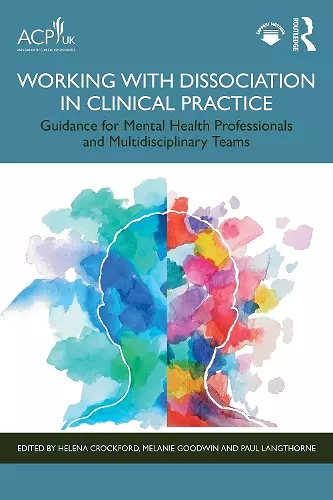
Working with Dissociation in Clinical Practice, which is published in partnership with the Association of Clinical Psychologist UK (ACP-UK), brings together current literature and the contributing authors’ professional and lived experiences to provide practical recommendations for supporting the mental health and wellbeing of individuals with dissociative difficulties.
Readers will benefit from learning how to apply this advice for best practice to a range of settings and client groups, ensuring more positive service user outcomes. Written in dialogue between experts-by-training and experts-by-experience, this essential edited volume covers practical strategies for practitioners working with dissociative clients. Authors address areas such as common misconceptions, assessment, co-morbidity, risk management and providing care and therapy within a trauma-informed and multi-disciplinary context. The book further explores support for dissociation within more specialist clinical areas, tailoring guidance to a range of client groups including, children, older people, those with learning disabilities, and those in forensic settings. It provides guidance for health systems and organisations to become more dissociation aware, within existing frameworks for trauma-informed care.
This book is a compelling read for clinical psychologists, other psychological and mental health practitioners, people with lived experience of dissociative difficulties and those who support them.
'So much expertise collected together fills me with hope. This book usefully combines essentials of understanding, recognising, and working with traumatic dissociation with practical specialist chapters. It has something for everyone whatever your profession, level of knowledge or stage of career. I wish it had been available during the decades of my own re-traumatising journey through mental health services and eventually into recovery. I believe that many of the dissociative trauma survivors I met and worked alongside during the 26 years of First Person Plural’s existence would echo this sentiment."
Kathryn Livingston,BEM, Expert-by-experience, Co-founder of First Person Plural
'This response to the growth in recognition and awareness of trauma and dissociation is an impressive and significant breakthrough. A practical, comprehensive and inclusive guide to dissociation-informed care and services, it fulfils its aims to inform, empower and provide guidance for good practice. A highly accessible resource, it presents a powerful case for change supported by the clinical and research literature and illuminated by the voices of those with lived experience. It will boost knowledge, skills and confidence for practitioners, supervisors and managers in all settings and for anyone involved with survivors of trauma, including survivors themselves.'
Sue Richardson, Psychotherapist, co-founder of European Society for Trauma and Dissociation - UK.
'This evidence-informed treatment guide provides outstanding support to multidisciplinary professionals in assessing and responding to dissociation. Written by those with clinical expertise and lived experience, it outlines culturally competent and person-centred care across mental health services. The book addresses the diverse needs of clients including those with neurodivergence. It includes a competency and training framework aligned with national and international trauma-informed care guidelines. With a wealth of practical suggestions, clinical vignettes, and stakeholder-reviewed recommendations, it offers strategies for improving assessment and treatment outcomes, reducing harm, and supporting training among service providers.'
Professor Bethany Brand, co-author of the Finding Solid Ground program / books, and Author of The Concise Guide to the Assessment and Treatment of Trauma-related Dissociation.
'Trauma-based dissociation, as a means of psychological and relational defence, is present in the lives of many people struggling with a wide variety mental health difficulties. It has a history of not being recognised or understood by services, from the individual practitioner through to the commissioning level. Dissociation, as so well described in this marvellously comprehensive book, can be a fundamental means of maintaining the best possible attachment relationships and well-being when growing up in truly dire circumstances. In adult life it can cause great difficulties with functioning, managing feelings, and the ability to form secure supportive relationships.
This book is an essential and accessible addition to the understanding of this often complex issue, including how to see the ways in which it can present across a broad range of mental health issues and with clear and thorough guidelines on thinking and practicing from a dissociation informed foundation. I highly recommend this book for all those professionals working in the field of mental health.'
Mark Linington,CEO CDS UK (Clinic for Dissociative Studies) and member of The Bowlby Centre, London.
'Multi-disciplinary psychiatric services may regard themselves as trauma-informed yet display a pervasive blindness to the clinical, personal, societal, economic and generational consequences of the most severe trauma-related conditions, namely the dissociative disorders, despite these being clearly described in major international classifications. This valuable book provides information from diverse sources that will make such neglect by health services harder to justify. The arguments for appropriate treatment provisions that are not re-traumatising are lucid, caring, and based in a wealth of published data as well as descriptions of personal experiences, essential reading for all providers of psychiatric services.'
Frank Corrigan, MD, FRCPsych, Developer of Deep Brain Reorienting
'Dissociation, often a response to the unbearable, is frequently misunderstood. As a survivor of child sexual abuse, deeply uncomfortable with the medicalisation of dissociative experience, I recognise the urgent need for practitioners working within clinical frameworks to understand dissociation in all its complexity. This book bridges the gap between the language of ‘disorder’ and the reality of survival. As someone who dissociates in medical settings - often misread as crisis or instability - it gives me hope for a shift in practitioner awareness, empathy, and support.'
Sophie Olson, Author and Founder of The Flying Child
‘While there is increasing recognition of dissociation in psychological therapies, there is less written about how best to work with it. In this book, the authors argue thoughtfully for a change in approach to mental health problems, and a recognition of the complex and multifaceted nature of dissociation as a route into working with difficulties that have often been with the sufferer for years. This book, very much a team effort, examines the urgent problem of how to be helpful in complex trauma.’
Dr Alasdair Forrest, Consultant Forensic Psychiatrist, Medical Psychotherapist, and Group Analyst, Aberdeen, Chair, Royal College of Psychiatrists in Scotland Psychotherapy Faculty, Chair, Training Committee of Institute of Group Analysis in Scotland
ISBN: 9781041038443
Dimensions: unknown
Weight: 600g
368 pages