Thinking Together in Primary Science
An Oracy-Based Approach to Teaching About the Nature of Science and Scientific Thinking
Rupert Wegerif author Neil Phillipson author
Format:Hardback
Publisher:Taylor & Francis Ltd
Publishing:5th Oct '26
£171.99
This title is due to be published on 5th October, and will be despatched as soon as possible.
This hardback is available in another edition too:
- Paperback£20.99(9781041121732)
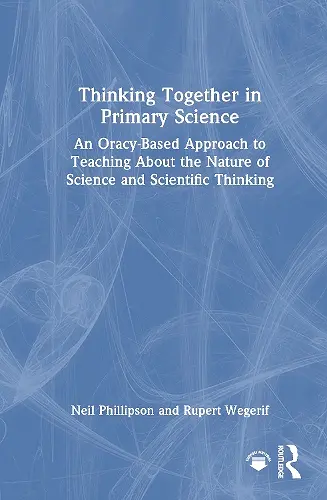
Thinking Together in Primary Science offers eight fully resourced lesson plans aimed at ages 9–11 to get teachers and primary-aged children talking together about science and how scientists think and learn as a community. The lessons will help children to form a stronger relationship with science and to understand how scientific thinking can help them in everyday life.
By secondary school, many young people have already decided that science is not for them. One implication of this is that people are less likely to adopt a “scientific mindset” when evaluating the information they encounter online. Understanding the nature of science – what it is and the ways of thinking associated with it – helps young people to identify with the subject and can protect them from everyday misinformation. The book introduces children to key ideas, such as the tentative nature of scientific knowledge, the importance of scepticism, and the role of evidence. It highlights how science can be trusted because of the collaborative way the scientific community generates, tests, and refines knowledge over time.
The book empowers teachers to teach science with greater depth and meaning while embedding oracy into the curriculum. Building on the evidence-based Thinking Together approach, it uses stories to spark dialogue that deepens children’s understanding of science, fosters a closer connection to the subject, and helps protect them from the misinformation so prevalent in today’s world.
"Thinking Together in Primary Science explains, in a clear and accessible way, why it is important that scientific thinking comes alive for young people through dialogue and discussion. But this book does much more: it provides teachers with practical guidance and resources, developed from classroom-based research, to make this happen successfully in their classrooms."
Neil Mercer, Emeritus Professor of Education, Hughes Hall, University of Cambridge, UK
"This practical, research-informed guide to ‘thinking together’ offers clear ground rules and engaging talk activities that help pupils develop the habits of mind underpinning scientific thinking. Using the UKS2 science curriculum as a rich context, it is a valuable resource for Year 5 and 6 teachers developing oracy."
Jane Turner,University of Hertfordshire (former Director, Primary Science Quality Mark), UK
"This book provides practical guidance for educators seeking to promote collaboration and curiosity in primary science. This timely publication offers a pedagogy that will enable children to understand that the question of ‘…how do you know?’ helps to navigate both the challenges of science and their social media-fuelled lives."
Natasha Serret, Associate Professor of Science Education, Nottingham Trent University, UK
'It’s so refreshing to see an approach that helps children understand not just what scientists have discovered, but how they arrive at their understanding of the world. This book demystifies the scientific approach, showing that everyone—children included—can join in and make a contribution.'
Tim Lewens, Professor of the Philosophy of Science, University of Cambridge, UK
ISBN: 9781041121770
Dimensions: unknown
Weight: unknown
164 pages