Love and Romance in China
From Comrades and Partners to AI Lovers
Format:Hardback
Publisher:Bloomsbury Publishing PLC
Published:2nd Oct '25
Currently unavailable, and unfortunately no date known when it will be back
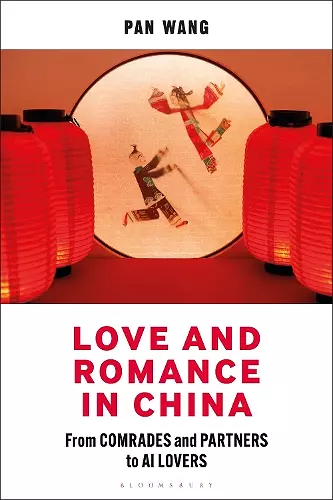
Examines love, affection, and emotions in China from the 1950s to the present, focusing on socialist love, Sino-foreign intimacy, LGBTQ+ love and rights, love crises, and China’s expanding love economy.
Love and Romance in Chinaexamines love, affection, and emotions in China from Maoist to contemporary China, focusing on the intersections with politics, economics, gender, class, race and technology.
From the founding of the People’s Republic of China to the end of the Cultural Revolution, political ideology and class struggle dominated everyday life, and love was subordinated to the communist revolution and socialism. During the Cultural Revolution, this turbulent period witnessed the paradoxical existence of self-abstinence and self-indulgence. Since China changed its political ideology in 1979 and shifted to a market-oriented economy, the country embraced the idea of romantic love. This “emotional turn” fostered opportunities for diverse intimate relationships characterized by the growth of cross-cultural love, LGBTQI+ love, and the emergence of a “sexual revolution” (Zhang 2011; Jeffreys and Yu 2015). The new dynamic was linked to contested discourses of (fantasised, eroticized, and racialized) foreign love intertwined with nationalist sentiments and ongoing tensions between sexual minorities and the government. The new millennium has witnessed love crises characterised by growing concerns about “leftover” men and women, high divorce rates, declining marriage and birth rates, and other relationship problems. The deepening of the market economy and technological advances have turned love into a “fast food” commodity for mass consumption, manifested in dating shows, digital platforms and intimacy between humans and AI/dolls.
Wang draws on a wide range of texts, including government statistics on marriages and divorces, legal documents, Maoist folk songs, poems, posters, love letters, media texts, popular discourses, online dating websites, and ethnographic observations and interviews.
The book combines diverse texts and methodologies to examine intimate relationships as a public discourse shaped through an evolution of institutional regulations and values, dis-institutional responses and practices, and emotional expressions and desires in contemporary China and beyond. Anybody who wants to expand their views about love and emotions can benefit from this reading. * Huike Wen, Willamette University, USA *
ISBN: 9781350511804
Dimensions: 236mm x 162mm x 18mm
Weight: 960g
216 pages