Research and Teaching with Speculative Fiction
Transdisciplinary Readings and Methods
Format:Paperback
Publisher:Bloomsbury Publishing PLC
Publishing:20th Aug '26
£21.99
This title is due to be published on 20th August, and will be despatched as soon as possible.
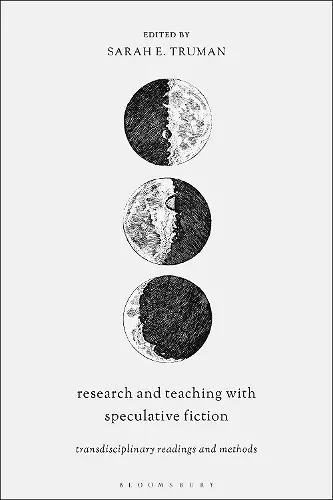
A diverse and timely collection of essays showing how scholars in humanities, arts and sciences use speculative fiction to think through pressing issues in their research.
This wide-ranging and timely open access collection of essays is ideal for readers who want to incorporate speculative fiction into their teaching and research across disciplines.
The terms speculation and speculative fictioning are increasingly used in education and interdisciplinary research methods to describe approaches grounded in asking “what if” questions that can unsettle the assumed certainties of the past, present, and future.
An Introduction by editor Sarah E. Truman and a Foreword by Steven Shaviro describe what speculative fiction is and examine its critical implications, offering a theoretical framework for understanding its applications to research and pedagogy. The chapters that follow explore these modes of thinking in practice by drawing on speculative fictions to examine disciplinary concerns related to climate justice, disability justice, racial justice, prison abolition, genetics, AI, the future of work, educational technologies, and gender. Through reflective narratives and critical analyses, twenty-five international contributors engage literary works by authors such as Octavia Butler, Jorge Luis Borges, Ted Chiang, and N. K. Jemisin, alongside films and television series including Gattaca, The Matrix, Severance, and Star Trek, connecting these texts to their own research and thinking. Each chapter also includes discussion and writing prompts for use in classrooms and research seminars.
The ebook editions of this book are available open access under a CC BY-NC-ND 4.0 licence on bloomsburycollections.com. Open access was funded by the University of Melbourne.
Research and Teaching with Speculative Fictions is an imaginative transdisciplinary collection that demonstrates the power of how speculative stories can unsettle assumptions, spark new ways of knowing, and open possibilities for more just and relational futures on pressing social, political, and ethical issues, from AI and genomics to indigenous architecture. An invaluable resource for scholars, educators, and students alike. -- EJ Renold, Professor of Childhood Studies, Manchester Metropolitan University, UK
What if fiction could transform research itself? This vital collection answers that provocation with startling range, bringing together scholars across disciplines to show how speculative fictioning unsettles assumptions, reimagines futures, and reorients practice. Essential reading for anyone who believes stories do more than reflect the world — they remake it. -- Felicity Colman, Professor of Media Arts, University of the Arts London, UK
This book genuinely excited me, and I believe it will do the same for others. It makes a compelling case for speculative fiction as a serious research and teaching tool, one that can shake up how we think about our fields, and push us to imagine other possibilities. What I especially appreciate is how the editor brought together voices from around the world while keeping the whole volume readable and accessible. Whether you're a researcher, teacher, or just someone trying to do things differently, this book offers both inspiration and practical ways forward. -- Sara Tolbert, Professor of Science and Environmental Education, Monash University, Melbourne, Australia
Sarah E. Truman’s edited collection serves to illustrate the wide-reaching implications of speculative texts and theorizing on how we think about and do research across disciplines. This is a timely contribution in a moment where ‘what if?’ questions are more important than ever. -- Brittany Tomin, Associate Professor in Secondary English Language Arts, University of Regina, Canada
ISBN: 9781350557710
Dimensions: 232mm x 156mm x 16mm
Weight: 220g
192 pages