The Appropriation of Islamic Philosophy
Creation in Ricoeur and Avicenna
Format:Hardback
Publisher:Bloomsbury Publishing PLC
Published:19th Feb '26
£85.00
Supplier delay - available to order, but may take longer than usual.
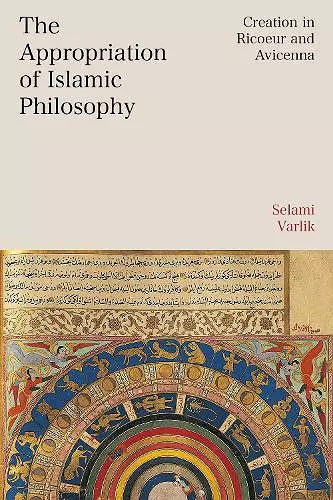
Revitalises the thinking of Avicenna through Paul Ricoeur’s hermeneutics, demonstrating the relevance of Avicenna's work today and articulating a living Islamic philosophy.
Phenomenology and philosophical hermeneutics are deepening their dialogue with ancient and medieval metaphysics. Yet Islamic philosophy - typically relegated to a distant past - remains strikingly absent despite its recognized impact on European thought.
To counter this absence, The Appropriation of Islamic Philosophy revitalizes the work of Avicenna - the seminal Islamic thinker - for contemporary philosophy, making a case for a Ricoeurian hermeneutics of appropriation.
Selami Varlik brings Avicenna into dialogue with Ricoeur through their shared concern with putting belief in tension with rational discourse. The notion of creation, common to both Islam and Christianity, plays a pivotal role in this convergence - particularly through Avicenna’s distinction between ontological creation and temporal creation.
By establishing a shared conceptual language between both traditions, this work makes a vital contribution to the development of a living Islamic philosophy, transcending the scope of the two thinkers examined here.
In this deep and fascinating study of the hermeneutic interrelations between medieval Muslim philosophy and modern European philosophy, Varlik pays tribute to Ricoeur’s ability to abandon chronology and culture in an unceasing quest for the polytonal nature of ancient, modern and Eastern thought. Here Varlik sees parallels with Avicenna’s philosophical skill in appropriating Greek wisdom into Islamic thought and the heuristic tensions that arise through such comparisons. Creating a rich resonance between these philosophical and religious traditions, Varlik also sees analogous tensions between, on the one hand, our efforts to derive hermeneutical appropriations across and between philosophies and on the other, our struggles to live with contradictory aspects of human self-hood, proposing that we address the tensions that inevitably arise from both philosophical and individual attempts to appropriate difference and manage the consequent uncertainties. In addition, by exploring the essence/ existence duality inherent in these and many other thinkers’ works, Varlik shows his own philosophical prowess and contributes significantly to the hermeneutical field of modern appropriative thought. * Alison Scott-Baumann, Professor of Society and Belief, SOAS, UK *
ISBN: 9781350570511
Dimensions: 236mm x 156mm x 20mm
Weight: 520g
248 pages