Precolonial Communities in Postcolonial Africa
The Resilience of Indigenous Groups in Contemporary Politics
Allan D Cooper editor Allan Cooper editor Emmanuel O Oritsejafor editor Emmanuel Oritsejafor editor
Format:Hardback
Publisher:Bloomsbury Publishing PLC
Publishing:6th Aug '26
£85.00
This title is due to be published on 6th August, and will be despatched as soon as possible.
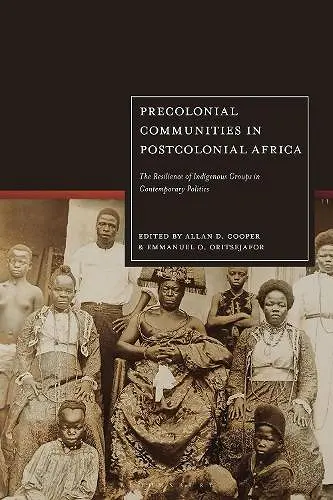
A unique collection examining how state structures in Africa often produce inequality and corruption - and how empowering Indigenous knowledges and practices can provide solutions
This collection takes on one of the most important and vexing issues in African development - the role played by African states in under-development on the continent - and shows how empowering resilient precolonial communities offers under-explored routes forward.
Rather than comparing African states to states elsewhere, this book takes a unique bottom-up approach and compares how major ethnic communities within Africa have developed over time under various state systems. It begins with an investigation into major precolonial societies and the way in which they were affected by the slave trade and colonialism. It then offers individual case studies from the length and breadth of the continent, and in so doing, provides a near-comprehensive account of historical African community and state formation, including coverage of under-researched peoples such as the central African Fang, as well as of the Kongo, Benin, Akan, Kru, Oromo, and Ovambo communities. Each case study analyzes how postcolonial African states have functioned as self-interested political entities often times at the expense of the economic and political development of its Indigenous communities, who are forced into a pluralist state systems that set them in economic and political competition with each other. True improvement in the lives of everyday citizens proves to be possible only by empowering traditional knowledges and practices - and with that, Indigenous communities' capabilities for economic and political self-governance.
Written by a significant contingent of African scholars, this collection contributes in its very practice to the decolonial policies it argues for, and is a must-read for researchers, upper-level students, and practitioners and policymakers interested in African development, African history, and post- and decolonial approaches to development.
This book is provocative and timely. Its argument is that the political cultures of African precolonial polities—their modes of governance and decision-making, their democratic sensibilities—retain relevance today. Framed by a smart introduction about theories of the African state and the role that Atlantic slavery and European colonialism played in re-shaping and hijacking African polities, the book’s chapters offer thick descriptions of legendary ethnicities—Kongo (Angola), Fang (Gabon/Cameroon), Benin (Benin), Akan (Ghana), Kru (Liberia), Oromo (Ethiopia), Ovambo (Namibia)—that tantalizingly demonstrate the resilience of tradition and provide models of a way forward. * Charles Piot, Duke University *
ISBN: 9781350592100
Dimensions: unknown
Weight: unknown
216 pages