Birds Never Die
Professor Richa Nagar author Medha Faust-Nagar author Marysia Zalewski editor shine choi editor Swati Parashar editor Cristina Masters editor
Format:Hardback
Publisher:Bloomsbury Publishing PLC
Publishing:18th Feb '27
£65.00
This title is due to be published on 18th February, and will be despatched as soon as possible.
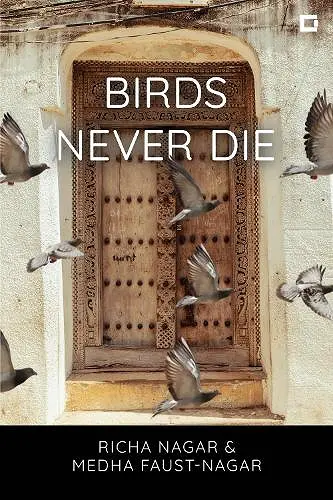
A creative critical intervention exploring the unsung feminine labors, sorrows, and sacrifices across six generations of women and the intricate social and cultural layers of gender, class, caste, and region, across four Indian cities between the 1870s and 1970s.
Set across four Indian cities between the 1870s and 1970s, the novel Birds Never Die is a creative critical intervention told through the voice of its protagonist, Tejas, who is stirred to pen the story of the unsung feminine labors, sorrows, and sacrifices across six generations that made her husband, Vilas Shankar, a famed Hindustani writer and national hero in the 1960s.
Exploring the intricate social and cultural layers of gender, class, caste, and region, this methodological and epistemic intervention in feminist transnational and translational studies brings to life largely neglected stories of women and family over a century-long period.
Beginning as a translation of an incomplete memoir by the late Pratibha Nagar, the authors’ grandmother and great grandmother, it also draws upon memoirs in Hindi by the late Sharad Nagar that were posthumously edited by his daughter, Richa. Through transforming these tales into an historical romance novel, this work taps into an archive of inherited stories, lived memories, and transgenerational traumas to journey across times and places, languages and accents, dreams and nightmares.
'Written by a mother daughter duo and set in the world of literary writers in the Hindi heartland, Birds Never Die is a riveting story of the backroom lives of literary men whose genius is predicated on the unacknowledged labour of women, who pine for acknowledgment and love but waste away, validated only in the world of women, mothers, daughters and grandmothers.' * Uma Chakravarti, , author of 'The Dying Lineage: The Crisis of Political Power in the Mahabharata', India *
'Part memoir, part fiction, part tribute to the labour – and love - of generations of women, this moving story sketches the complex intermeshing of the daily grind of women’s lives, the ways in which small quotidian irritations, barely suppressed angers, the limits of language battle with a kind of love, a kind of care and – sometimes – emerge victorious. This melding of fiction, history, memoir, emotion upturns questions of ‘objectivity’ and brings the reader up against the deep politics of the personal.' * Urvashi Butalia, author of 'The Other Side of Silence: Voices from and the Partition of India', India *
'How can a novel be so many things at once? Birds Never Die is a story about stories themselves, and who gets to tell them, and in what form, and where and why. It’s the story of a nation over generations, resplendent with politics and art. It’s the story of a marriage, with all its attendant joys and sorrows. It’s the story of several fierce and strong women, the systems designed to subjugate them, and the fierce determination not to let them. It’s the story of a family, with all its complexities and love. Taken altogether, it’s nothing less than a tapestry of life in twentieth century India. This novel will astound you with the beauty of its writing, and of the lives that writing animates. Quite simply, it’s one of the finest novels I’ve ever read.' * Peter Geye, author of 'A Lesser Light', USA *
'Against the backdrop of a century of turbulent Indian history, Birds Never Die narrates the unbearable price a writer’s journey extracts from his wife and family. A multigenerational tale of love and sacrifice, it careens seamlessly across place and time in astonishing detail and enviable scope.' * Sorayya Khan, author of 'We Take Our Cities with Us', USA *
'For every story a writer tells, there are at least two others that remain untold,” says Tejas, the heroine of Birds Never Die, near the end of the book. Above all else, this novel is a veneration of all the women’s stories left unwritten in the service of men’s tales over the centuries, a loving and unflinching look at the ways women—whether united by blood, friendship, or shared goals—find ways to support each other in the face of life’s most harrowing trials. If The Odyssey were told by Penelope, we must imagine it would look something like this: a tale of cooking and weaving, rejoicing in friendship and suffering loneliness, paying bills and raising children, all to support the great works of a celebrated man who only occasionally acknowledges the foundation on which his success is built. And yet it is a tale so deeply enmeshed with the culture of Northern India in the early 20th century that it is impossible to imagine it happening anywhere else, infused as it is with the music, films, poetry, and flavors of that time, as well as the real experiences of the authors’ own ancestors. Birds Never Die is a rare and moving look into a world that has too often remained hidden, the world behind the scenes where women’s strength sustains generations.' * Anjali Sachdeva, author of 'All the Names They Used for God', USA *
How does one live the life of a three-fourths of a writer? This is what resonates in us upon reading Birds Never Die. A generational saga of women coping with rude jolts of life, without forgetting to be kind, unfolds from United Provinces to the new centre of film world by the shores of Arabian Sea and down South spatially, and it breathes the history of the new nation – India – from the first war of independence to partition and after, temporally. The expanse of the outer world is outdone by the interior world of emotions, shared and unshared. Tejaswini’s desperate attempts to be part of Vilas Sankar’s writerly life, its economic roller-coaster, emotional cyclones, superiority of intellect and skill, restlessness of a creative moment are revealed from the backyard. A façade offered by patriarchy with its unquestioned legitimization of male superiority is broken into tiny pieces with all the compassion one can muster. And, unsurprisingly, giving into its demands in the name of love! It is that pull of love despite the non-existence of equality that we find in the birds in flight, singing with the unsung writer. The novel compels us to look beyond the colourful blurbs and recognitions. The family-saga has found in Richa Nagar and Medha Faust-Nagar a dexterity and sense of justice across oceans and generations; and has, therefore, made them its home. * A. Mangai, author of 'Acting Up: Gender and Theatre in India 1979 Onwards', India *
'This is a spellbinding narrative. Mannoo’s life story – the world she exists in but also the world she creates by existing in it – carries the aroma of our shared foremothers, female relatives and friends. It embodies the haunting echo of their sorrows, the intimate betrayals, and quotidian joys. Brilliantly crafted, this is a rare story of sisterhood that will hold you in its warm embrace long after you have closed its covers.' * Aparna Vaidik, author of 'Revolutionaries on Trial: Sedition, Betrayal, and Martyrdom', India *
'Birds reclaims women’s lived experiences from the footnotes of memory, offering a keenly observed meditation on gender, caste and class. From the seeds of an unpublished, incomplete memoir comes a story that pays tribute to the sacrifices and care that make achievements possible, and it brings to light private worlds that have often been left out of the public record.' * Sanam Maher, author of 'The Sensational Life of Qandeel Baloch', Pakistan *
ISBN: 9781350600461
Dimensions: unknown
Weight: unknown
304 pages