Resequencing the Middle Ages through Archaeogenetics
Interpreting the Past through Science and History
Format:Paperback
Publisher:Bloomsbury Publishing PLC
Publishing:1st Oct '26
£24.99
This title is due to be published on 1st October, and will be despatched as soon as possible.
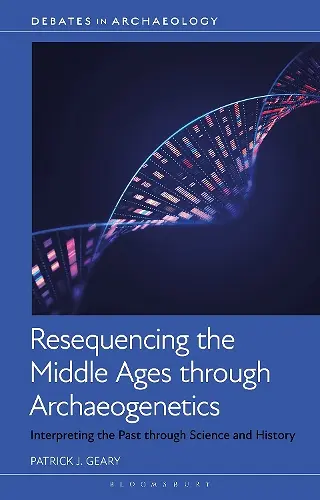
Offers an accessible introduction to archaeogenetics paying particular attention to the methods and approaches that are reshaping how archaeologists and historians think about the past.
Offering a clear and accessible introduction to the fast-growing field of archaeogenetics, this book pays particular attention to the methods and approaches that are reshaping how archaeologists and historians think about the past.
Written for readers with no prior background in genetics, it explains in straightforward terms how genomic research can shed light on mobility, population change, social organization and cultural practices. At the same time, it begins with a critical reflection on the troubling history of attempts to fuse biology and history, showing how earlier racialized approaches distorted the past and warning against their resurgence today. By foregrounding both the current approaches and challenges of archaeogenetics, this book helps readers approach the field with a critical and informed perspective.
The book’s central case study is the Carpathian Basin between 400 and 900 CE, which was a region at the crossroads of the transformation of the Roman world. Drawing on the most up-to-date research, this book demonstrates how integrating genomic, archaeological and historical data can illuminate the complex social and cultural changes of Late Antiquity and the early Middle Ages. The result is a concise yet compelling narrative of how cutting-edge science is reshaping medieval studies.
Resequencing the Middle Ages is an excellent and accessible introduction to the use of ancient genomic data for historical research. Suitably critical and reflective about the research process, the book helpfully lifts the lid on how genomic data are actually produced and what they can and cannot tell us, demystifying a field that scholars of various fields have too often approached with either uncritical enthusiasm or blanket suspicion. The book synthesises many of the fine-grained population histories across Europe in the late antique and early medieval periods that have been published in recent years into a coherent narrative, showing just what a contribution genomic data can make. Essential reading for historians and archaeologists working in this period or grappling with what the genomic turn means for their disciplines. * Susanne Hakenbeck, Associate Professor of Archaeology, University of Cambridge, UK *
ISBN: 9781350614611
Dimensions: 212mm x 138mm x 10mm
Weight: 250g
176 pages