Handbook of Learning Disabilities, Third Edition
Nicole Patton Terry editor Cynthia M Okolo editor Laurie E Cutting editor
Format:Paperback
Publisher:Guilford Publications
Published:16th Mar '26
Should be back in stock very soon
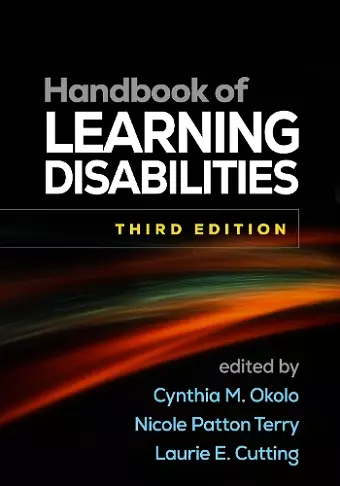
This definitive handbook is now in an extensively revised third edition, including many all-new chapters and new topics. Foremost experts review the breadth of current knowledge about learning disabilities (LD), from core psychological and neurobiological processes to evidence-based instruction. Chapters describe best practices in identifying and supporting students with difficulties in reading, writing, math, and other content areas. Service delivery models that support differentiated instruction and data-based decision making are examined, and ways to meet the needs of specific populations, including English learners with LD, are explored. Prior edition editors: H. Lee Swanson, Karen R. Harris, and Steve Graham.
New to This Edition
- Reflects a decade of advances in research, policy, and educational practice.
- Most chapters are new or extensively updated.
- Chapters on language development and reading disabilities, LD in English learners, social–emotional learning, comorbidity with LD, dyslexia legislation, cultural and equity issues, the use of technology to support differentiated instruction, state-of-the-art research methods, teacher preparation, integrated multi-tiered systems of support, and other timely topics. <
“Okolo, Patton Terry, and Cutting continue in the tradition of Swanson et al. to provide a current, comprehensive picture of the field of LD. The third edition captures updated perspectives on genetics and neurobiology, language and cognitive processes, measurement and classification, instructional practices, educational technology, and policy. Notable new topics include multi-tiered systems of support and social–emotional learning, reflecting the field’s growing complexity and responsiveness to real-world educational challenges. Contributors thoughtfully examine the shift toward dimensional models of classification and emphasize the need for equitable access to high-quality instruction as a foundation for fair LD identification.”--Nicole Landi, PhD, Department of Psychological Sciences, University of Connecticut
“From MVPs in the field, the third edition of this handbook should be required reading for researchers, teacher educators, and teachers. The volume addresses advances in topics covered in previous editions while introducing such timely topics as progress monitoring, preventing and ameliorating reading disabilities among English learners, trends in dyslexia legislation, and preparing teachers to provide evidence-based instruction for students with LD. The editors have pulled off an impressive feat by including a wide breadth of issues without sacrificing depth.”--Jade Wexler, PhD, Department of Counseling, Higher Education, and Special Education, University of Maryland, College Park
“At a time when scientific findings and scholarly expertise are being called into question, the third edition of this handbook represents the very best knowledge available in a field that advances and grows because of systematic research. Okolo, Patton Terry, and Cutting have brought together a peerless group of LD experts to address a wide range of relevant topics. Chapters address perennial psychological and epidemiological questions, advance our understanding of instructional interventions and their impacts, and consider the implications of emerging research methods, sociocultural changes, and trends in teacher education. This handbook is essential reading for LD researchers and school leaders, as well as graduate students in special and general education, psychology, and related fields.”--David J. Chard, PhD, Professor Emeritus and Dean Emeritus, Wheelock College of Education and Human Development, Boston University
“Building on theory and current evidence, this handbook comprehensively covers the most pressing issues that LD researchers and practitioners face today. Chapters carefully review foundational work in etiology and treatment and offer nuanced consideration of the multifaceted effects of LD, including co-occurrence across diagnoses and the interactions between children and instructional environments. The challenges of optimal identification and intervention are covered with a balance of breadth and depth. This is a volume that I know I will reach for often as a key research reference and a resource for teaching the next generation of reading and language scholars and clinicians.”--Elizabeth Norton, PhD, Department of Communication Sciences and Disorders, Northwestern University-
ISBN: 9781462559060
Dimensions: unknown
Weight: 1060g
588 pages
3rd edition