The Constitutional System of Nepal
A Contextual Analysis
Format:Hardback
Publisher:Bloomsbury Publishing PLC
Publishing:29th Oct '26
£85.00
This title is due to be published on 29th October, and will be despatched as soon as possible.
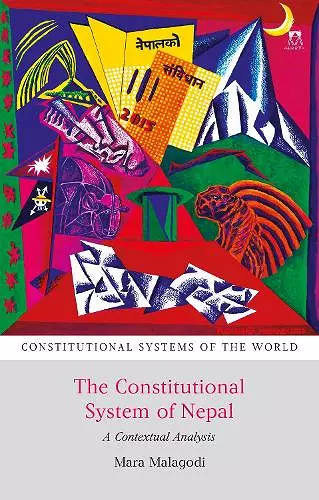
Presents an evolutionary view of Nepal’s constitutional system, grounded in the country’s historico-political context.
This book traces the evolution of Nepal’s constitutional order through its history, politics, and social transformation, with particular emphasis on the 2015 Constitution, the country’s seventh and current constitution. It examines the forces that have shaped constitutional change since Nepal’s first experiments with constitutional democracy in the early 1950s.
The book identifies three defining themes in Nepal’s constitutional development.
First, it explores the enduring challenge of constraining executive power. Despite adopting parliamentary government, Nepal has experienced repeated constitutional instability, including authoritarian rule, executive dominance, frequent government turnover, and the marginalisation of the legislature. Historical struggles between hereditary rulers and representative political forces have profoundly influenced constitutional institutions. Since 1990, the Supreme Court has become a central constitutional actor, intervening in major political crises while itself becoming the subject of political contestation.
Second, the book examines the constitutional politics of identity in one of South Asia’s most diverse societies. Demands for inclusion, representation, and social justice have reshaped constitution-making and constitutional adjudication, influencing the civil war, the post-conflict transition, and implementation of the 2015 Constitution. By situating these developments within Nepal’s history of monarchy, Hinduism, and social hierarchy, the book highlights how competing visions of nationhood continue to shape constitutional debates.
Third, the book analyses Nepal’s exceptional record of constitutional replacement, with seven constitutions in fewer than eighty years. It argues that successive constitutional settlements reflect both domestic political struggles and the selective adaptation of foreign constitutional models.
Combining constitutional law, political history, and comparative analysis, the book provides a comprehensive account of constitutionalism’s past, present, and future in Nepal.
ISBN: 9781509947256
Dimensions: unknown
Weight: unknown
304 pages