Artificial Intelligence, Neurodata, and Society
Law at the Edge of Cognition
Format:Paperback
Publisher:Bloomsbury Publishing PLC
Publishing:3rd Sep '26
£25.99
This title is due to be published on 3rd September, and will be despatched as soon as possible.
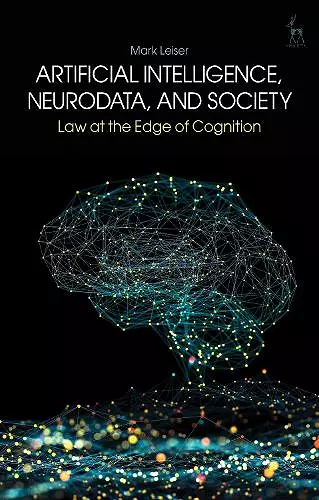
This book explores how AI systems trained on neurodata are redrawing the boundaries of dignity, autonomy, and legal personhood.
It reveals the emerging reality of NeuroAI: a world where machine-learning models anticipate our thoughts before we have even formed them. As neurotechnologies evolve, AI systems move beyond interpreting brain signals in labs and headsets to harvesting neurodata (whether extracted through direct interfaces, inferred from everyday behaviour, or reverse-engineered via predictive modelling) from users who never consented or even knew they were being monitored, transforming the subconscious into a commodified dataset.
Drawing on case studies from criminal trials, law enforcement, and consumer technologies, the book reveals how Big Tech and platform operators increasingly treat neurodata as a resource for monetisation. Across the EU and the USA, emerging AI and data-protection regimes, including the EU AI Act and GDPR, as well as the US Fourth Amendment and HIPAA frameworks, offer incomplete or inconsistent safeguards against NeuroAI trained on neurodata to model and predict thoughts, emotions, or intentions, leaving cognitive inference primarily in a legal grey zone.
Indispensable for legal scholars, technologists, and regulators, this critical roadmap illuminates the gaps in current law and identifies the safeguards needed to protect our most intimate inner lives. In a future where thoughts can be inferred, monetised, and weaponised without ever accessing the brain directly, this book shows us where the law must catch up before our minds, our rights, and our freedoms are turned into the next frontier of exploitation.
It cannot have escaped anyone’s attention that AI is here to stay, is rapidly colonising all aspects of social life, including the law and that, to echo Mark Leiser’s previous book, Dark Patterns, Deceptive Design, and the Law, has a dark side – to say the very least. What is perhaps far less known is how AI is now using data culled, not from what people say or write, but directly from their brains in the form of neurodata. This may have valuable applications in some areas, like medicine, but it is potentially highly problematic in the legal sphere, such as policing and the proof of crimes. Dr Leiser’s new book, Artificial Intelligence, NeuroData, and Society: Law at the Edge of Cognition, presciently explores the implications and possible regulatory solutions to this growing interface between AI and neurodata. It is a must-read for anyone interested in the legal process, AI and Neuroscience. * Professor Donald Nicolson, Essex Law School *
A rigorously researched and lucidly written book on NeuroAI, a topic that deserves widespread attention given the potentially profound implications for human dignity and autonomy. The book shows where law is lacking or has failed to keep pace and offers a compelling framework as to how our rights and freedoms can be better protected. This book will quickly become a point of reference in the field of law and technology studies. * Professor Patrick O'Callaghan, University College Cork *
ISBN: 9781509993628
Dimensions: unknown
Weight: unknown
360 pages