Music, Authorship, and the Lyric in Seventeenth-Century England
Format:Hardback
Publisher:University of Pennsylvania Press
Publishing:16th Mar '27
£60.00
This title is due to be published on 16th March, and will be despatched as soon as possible.
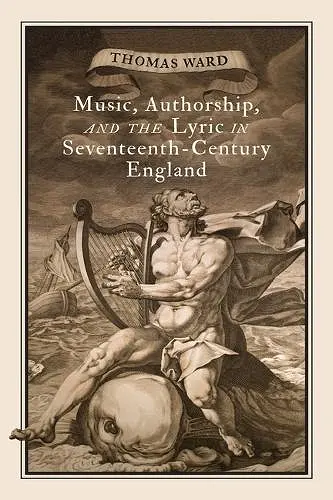
A consideration of the neglected role of music in the formation of a literary public sphere in seventeenth-century England
Music, Authorship, and the Lyric in Seventeenth-Century England explores how mid-seventeenth-century English lyric poetry became "literary" through a transformative encounter with song.
Focusing on poems that explicitly foreground their own transformation, adaptation, and even corruption across time and media, Thomas Ward argues that the potential for textual and musical transmission to compromise the illusion of a stable, authoritative lyric speaker became a resource for imagining engaged communities of politically and poetically sympathetic readers. Song in particular, through its power to color and distort the written word, came to figure the broad array of media through which poetry could circulate among audiences who were widely dispersed by political and social circumstances. Cast in such a role, musical performance emerged as a context within which the inevitable mutability of the authorial text did not have to become a source of anxiety or an embarrassment to its status as idealized literary artifact but could, instead, signal a relationship of trust and good faith among readers of verses travelling far beyond their authors' immediate control.
Examining the musical lives and afterlives of poems by John Milton, Katherine Philips, Edmund Waller, Abraham Cowley, Thomas Stanley, and others, Music, Authorship, and the Lyric puts forth a new theory of poetic error, variants, and other forms of adaptation that challenges prevailing critical assumptions that these forms of textual "noise" necessarily work against literary authority or representational hegemony.
ISBN: 9781512830828
Dimensions: unknown
Weight: unknown
304 pages