Research Methods in Anthropology
Qualitative and Quantitative Approaches
H Russell Bernard author Amber Wutich author
Format:Hardback
Publisher:Bloomsbury Publishing PLC
Publishing:15th Oct '26
£190.00
This title is due to be published on 15th October, and will be despatched as soon as possible.
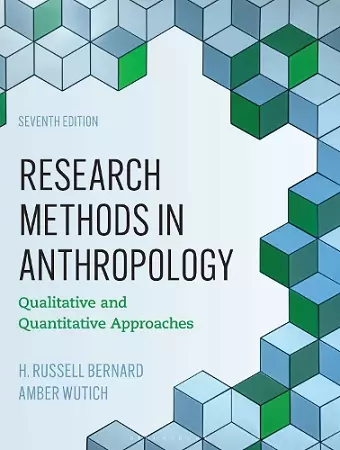
Covering both quantitative and qualitative research methods, this is the only book on the market with a distinctly anthropological approach.
Research Methods in Anthropology is the field’s classic, celebrated introduction—and the most comprehensive survey available—of qualitative and quantitative research methods. Written in Russell Bernard’s unmistakable conversational style, this guide has launched tens of thousands of students into fieldwork with a combination of rigorous methodology, wry humor, and commonsense advice. The book’s tripart organization covers the three major components of research (research design, data collection, and data analysis) in an accessible, step-by-step manner that eases students into developing their anthropological mindsets. Boldfaced key terms introduce students to the vocabulary of social research, boxes expand on ideas covered in the text, and an appendix on “Resources for Fieldworkers” provides a comprehensive collection of student aids for the code of ethics, statistics packages, research journals, and area files.
New to the Seventh Edition:
- New Chapter 6, “Ethics and the Conduct of Anthropology” walks students through the challenges anthropologists face in research and how to deal with them
- New Chapter 25, “On Writing Up” introduces the basics of getting articles published in peer-reviewed journals
- New discussion of “The Art of Proposal Writing” teaches students to write persuasively about the importance, rigor, and creativity of their proposed work
- Expanded Chapters 11 and 12, “Collecting Cultural Domain Data” and “Collecting Social Network Data” offer practical skills in data collection for both cutting-edge and classic anthropological methods
In my courses on ethnographic methods, I have assigned multiple incarnations of H. Russell Bernard’s Research Methods in Anthropology to upper-division undergraduate and graduate students. I also use it as my own go-to guide for planning and implementing anthropological projects. The latest edition, co-authored with Amber Wutich, includes substantial additional guidance on writing proposals and drafting publications. It also contains expanded and updated material on research ethics and clarification on important qualitative methods. I look forward to assigning this updated book in the near future. * Michele Gamburd, Portland State University *
This classic textbook, a comprehensive introduction of anthropological research methods with rigor and clarity, has been always the cornerstone of my research and teaching in and beyond this field. The seventh edition keeps that approachable voice while refreshing and enhancing the toolkit. With these updates, the authors make an indispensable text an even stronger bridge between methodological principles and research practice in the fast-changing world today. * Shaozeng Zhang, Oregon State University *
A newly-updated classic and comprehensive work, the seventh edition of Research Methods in Anthropology should be required for anyone who calls themselves a social scientist or anthropologist. It is a service to our discipline, setting forth the clearest and most compelling arguments for social science. Bernard and Wutich’s contributions have ensured generations of valid and critical research questions, research design, and findings. * Jonna Yarington, Colorado State University *
Research Methods in Anthropology has earned its place as the field’s essential methods reference. Grounded in practical wisdom, it renders the full spectrum of research design accessible without sacrificing depth, showing that rigorous science and deep ethnographic sensitivity are not only compatible but mutually reinforcing. If you only had to read one methods book, this would be the one. * Dimitris Xygalatas, University of Connecticut *
I read this book cover to cover as a graduate student in a hostel in Ho Chi Minh City, Vietnam, waiting to meet my very first research participants. Decades later, it is a true companion to my undergraduate students and me as I teach them the seemingly unteachable in one semester – anthropological research methods. The authors’ friendly tone is just right for students encountering field notes, transcripts, coding, and p-values for the first time. The constantly-updated, engaging references to real anthropologists’ work fills in the gaps we just can’t cover in one semester and helps my students understand the breadth of anthropological fieldwork. The new chapters on proposal writing and writing manuscripts for publication will be invaluable to graduate students and early-career professionals. * Jessie Fly, Eckard College *
Over the last four decades, while many social sciences methods texts have come and gone, Research Methods in Anthropology: Qualitative and Quantitative Approaches enters its seventh edition with a new co-author (Amber Wutich, ASU) and publisher (Bloomsbury Academic). It remains true to its original goal of bringing cultural anthropology methods to the masses. Research Methods in Anthropology is essential reading for anyone undertaking social science research at any level and at any scale. The book teaches readers not just how to do research, but why particular choices matter. Always within arm’s reach, Research Methods in Anthropology has been my constant companion, from my first undergraduate project, through my dissertation, and now as the indispensable text I place in the hands of my own students and recommend to colleagues. Bernard and Wutich manage the rare feat of writing a work simultaneously encyclopedic and eminently readable, setting a standard that few texts approach and none surpass. At once a handbook, reference guide, and mentor in print, the book equips readers to validate methodological choices with rigor and confidence. Its thoughtful integration of qualitative and quantitative approaches, ethics, proposal writing, and analysis reflects decades of field-tested wisdom. If I see Research Methods in Anthropology cited in a research proposal, I am immediately reassured that the study rests on sound methodological ground. * Brandon D. Lundy, Kennesaw State University *
Bernard's Research Methods in Anthropology is a trusted, reliable handbook that I have used for over fifteen years of teaching Research Methods to undergraduate students in anthropology. The book is engaging in its coverage of various qualitative and quantitative methodologies employed by social scientists. This new edition has two important new chapters. Chapter six chronicles what has been a shifting landscape of ethical concerns within the field, and the complexity and importance of conducting ethical, non-extractive research. The various real-world examples of ethical challenges previous anthropologists have faced add depth to all of the chapters of this book. Finally, a new chapter on "writing up" research offers a helpful guide for young scholars to prepare manuscripts for publication. While my own students may not need this at this point in their careers, the advice offered is knowledgeable and helpful for any student imagining a career that requires analytical and communication skills. * Amy Speier, University of Texas at Arlington *
Research Methods in Anthropology is unique in its helpful, practical, and clearly organized advice on methods that makes it clear not just how to use methods, but also when and why they should be used and what the pros and cons are of each methodological approach. Often when one introduces students to methods, it seems so abstract that they don’t really understand what they would do to implement them—but the many anecdotes told by the authors in Research Methods in Anthropology give enough detail and context to overcome this block and make research possible. * Mary K. Shenk, The Pennsylvania State University *
This edition is a welcome expansion of a book that defines and explains best practices in anthropology. Long regarded as the “bible” by many scholars, Bernard’s critical lessons are expanded and enriched through Wutich’s insights. Their engagement with ethics, research writing and the rejection of the qual-quant divide reminds practitioners and students of ethnography’s enduring strength and value. * Jeff Cohen, Ohio State University *
Updated and expanded, Russell Bernard’s definitive manual just keeps getting better. The addition of Amber Wutich, a cutting-edge methods scholar in her own right, as co-author adds depth and breadth to the work. Her experience provides new memorable examples of research approaches that went well—and others that did not. Among the helpful and compelling changes in this edition are a new stand-alone chapter on ethics and conduct, a useful explanation of research proposal structure, and expanded discussions on cultural domain analysis, social network data, and focus-group related methods. I’ve been using earlier editions of Bernard’s Research Methods in Anthropology since I was in graduate school. This updated edition will remain my go-to work when I am designing a research project or teaching my mixed-methods ethnographic methods course for graduate students. * Daniel Thompson, University of California, Merced *
This thoughtfully updated and expanded edition of Research Methods in Anthropology affirms its position as an indispensable guide for the design and conduct of anthropological field research. It offers accessible and thorough attention to a vast array of rigorous field methods as well as grounding in the philosophical foundations and principles that undergird systematic research across the social sciences. With welcome new chapters that expand on ethics, analyzing social network data and writing up, as well as attention to the use of AI in text analysis, this edition stays on the forefront of current qualitative and quantitative approaches. The vignettes presented in “Russ’s Corner” and “Amber’s Corner” offer concrete examples of research experiences and lessons learned. While aimed at emerging researchers, the book is also useful for experienced researchers who aim to increase their repertoire of mixed methods that support holistic investigation of human behavior, lived experiences and societal challenges. * Catherine M. Tucker, University of Florida *
As a standard in the discipline, Research Methods in Anthropology has a keen awareness of the strengths of the anthropological approach to research without leaving the reader alone to figure out some of the potential pitfalls. The new version adds valuable insights from both Wutich and Bernard, which is especially evident when covering the collapsible dichotomy that is the choice between qualitative and quantitative methods. * Katharina Rynkiewich, Washington State University *
ISBN: 9781538190920
Dimensions: unknown
Weight: unknown
744 pages
7th edition