Languages in Africa
Multilingualism, Language Policy, and Education
Ruth Kramer editor Elizabeth C Zsiga editor One Tlale Boyer editor
Format:Paperback
Publisher:Georgetown University Press
Published:3rd Mar '15
Currently unavailable, our supplier has not provided us a restock date
"The volume offers a major contribution to multilingualism scholarship and opens up unexplored dimensions of the phenomenon. It provides fresh insight into the sociolinguistics of multilingualism by bringing together a wide range of case studies, especially those on languages whose critical status has not been reported before. Its coverage is enhanced by contributions from scholars that work both within and outside Africa. It will interest a wide range of readers, including African linguists, language educators, policy makers, and graduate students interested in multilingualism research."—African Studies Quarterly
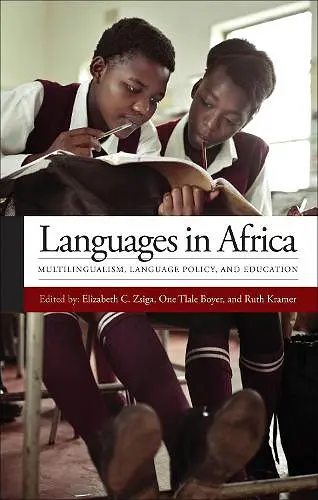
Explore the layers of African multilingualism as they affect language policy and education. This book includes case studies ranging across the continent, the contributors consider multilingualism in the classroom as well as in domains ranging from music and film to politics. It also reveals how poor teacher training leads to failures in education.People in many African communities live within a series of concentric circles when it comes to language. In a small group, a speaker uses an often unwritten and endangered mother tongue that is rarely used in school. A national indigenous language - written, widespread, sometimes used in school - surrounds it. An international language like French or English, a vestige of colonialism, carries prestige, is used in higher education, and promises mobility - and yet it will not be well known by its users. The essays in Languages in Africa explore the layers of African multilingualism as they affect language policy and education. Through case studies ranging across the continent, the contributors consider multilingualism in the classroom as well as in domains ranging from music and film to politics and figurative language. The contributors report on the widespread devaluing and even death of indigenous languages. They also investigate how poor teacher training leads to language-related failures in education. At the same time, they demonstrate that education in a mother tongue can work, linguists can use their expertise to provoke changes in language policies, and linguistic creativity thrives in these multilingual communities.
The volume offers a major contribution to multilingualism scholarship and opens up unexplored dimensions of the phenomenon. It provides fresh insight into the sociolinguistics of multilingualism by bringing together a wide range of case studies, especially those on languages whose critical status has not been reported before. Its coverage is enhanced by contributions from scholars that work both within and outside Africa. It will interest a wide range of readers, including African linguists, language educators, policy makers, and graduate students interested in multilingualism research. African Studies Quarterly
ISBN: 9781626161528
Dimensions: unknown
Weight: 318g
220 pages