Multiple Perspectives on Social Identities in Japan
Language Variation and Change
Format:Hardback
Publisher:Bloomsbury Publishing PLC
Publishing:7th Jan '27
£80.00
This title is due to be published on 7th January, and will be despatched as soon as possible.
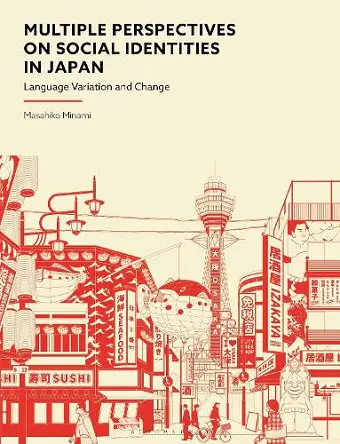
Explores linguistic variation and social identities in Japan.
Offering a comprehensive exploration oflinguistic variation and social identities in Japan, this book contributes to fostering cross-cultural understanding.
It explores how language variation interacts with culture, affecting cultural transformation and transmission, with a specific emphasis on the Japanese language.
Despite Japan’s common perception as a homogeneous society, it is essential to recognize sources of diversity, including substantial Korean and Chinese minorities. This challenges the portrayal of monolithic collectivism within the framework of homogeneity.
The eight chapters are organized around the overarching theme of social identities within Japanese culture and society. The first half concentrates on language varieties (regional and social dialects) and their relationship with identity, exploring how language is instrumental in constructing group membership, either by creating and embracing it or by resisting and altering group boundaries. This section covers both regional dialects, grounded in geography, and social dialects (sociolects), specific to sociocultural groups.
The second half further analyzes identity, examining how identities align with sociolect categories such as gender, occupation, and ethnicity which are fluid, multiple, and socioculturally constructed. Within the social constructionist paradigm, speakers use language to position themselves vis-à-vis their interlocutors. Despite historical influences emphasizing collectivism in East Asian cultures, this section questions the proposed dichotomy with Western societies, exploring its applicability to Japanese society.
Minami’s fascinating, well-researched book compiles a great deal of information about the interplay of language, culture, identity, and world view. He goes well beyond simplistic misconceptions of Japan as a homogeneous culture distinguished by the use of language which involves honorifics when dealing with older listeners to look in detail at variations of language due also to gender, education, social status, region, social context, and a speaker’s desire to be perceived as polite. -- Allyssa McCabe, Professor Emerita, Department of Psychology, University of Massachusetts Lowell, USA
ISBN: 9781666968965
Dimensions: unknown
Weight: unknown
248 pages