The Strategic Use of Fidelity in Romantic Relationships
Defensive Monogamy and Self-Protection
Format:Hardback
Publisher:Bloomsbury Publishing PLC
Published:19th Mar '26
Currently unavailable, and unfortunately no date known when it will be back
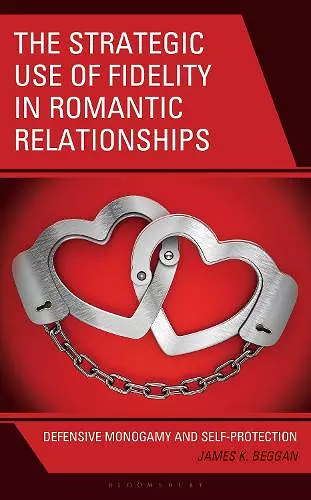
This book offers a bold reinterpretation of monogamy, framing it not as a reflection of romantic desire but as a calculated effort to secure exclusivity from a partner.
Despite widespread dissatisfaction, infidelity, and high divorce rates, monogamy remains the dominant relationship model. Rather than attributing this persistence to irrationality or tradition, James K. Beggan explores monogamy as a defensive practice—a strategic agreement in which individuals seek commitment primarily to ensure their partner’s fidelity. Rooted in fear of loss, jealousy, and emotional insecurity, this book reveals how monogamy often functions as a protective mechanism rather than a mutual aspiration. People overestimate their ability—or willingness—to uphold monogamous commitments, viewing them less as personal convictions and more as tools for managing risk. Drawing on interdisciplinary research across behavioral economics, psychology, sociology, and decision science, this book reconceptualizes monogamy as a form of social bargaining. By shifting the focus from morality to strategy, it challenges the ideal of romantic exclusivity and raises a provocative question: Are declarations of loyalty expressions of love, or are they evidence of doubt dressed as devotion?
The Strategic Use of Fidelity in Romantic Relationships interrogates the monogamy myth by identifying the logical and pragmatic fissures in monogamy theory and practice. Beggan’s expansive examination begins with a simple observation regarding divorce rates and proceeds to address previous research, popular defenses, and persistent assumptions regarding Western culture’s continued valorization of monogamy particularly in its most common form, marriage. Beggan’s provocative concept of “defensive monogamy” challenges existing conceptualizations and data regarding fidelity and is a significant contribution to relationship studies. Through “defensive monogamy,” he more accurately and more rationally describes the way in which relationships function and the ways they dysfunction. In the words of J. P. Morgan, people make decisions for two reasons: the “good reason” and “the real reason.” Beggan’s excellent work investigates the real reasons we deploy monogamy and how those reasons frequently derail the fidelity and security couples seek. * Ann C. Hall, Professor Emeritus, University of Louisville, USA *
A thought-provoking and deeply nuanced exploration of one of the most complex human arrangements: monogamy. This book deftly examines the interplay between fidelity, self-protection, and the human need for connection, offering readers fresh insight into the strategies and motivations that shape romantic commitment. * Scott T. Allison, Professor Emeritus, University of Richmond, USA *
The Strategic Use of Fidelity in Romantic Relationships trades moral panic for precision. It shows how control can masquerade as care, then offers language and tools to separate fear from values and to build agreements that fit real lives. Rigorous yet humane, it favors consent as practice, clarity about boundaries, and honest talk about risk and desire. As a scholar of ethics and communication, I admired its steadiness and respect for readers’ values. As a reader, I felt seen. A smart, compassionate companion for anyone trying to keep love and honesty in the same room. * Patrick R. Johnson, Assistant Professor of Journalism and Media Studies, Marquette University, USA *
Defensive Monogamy explores the provocative idea that monogamy and fidelity may serve as strategic tools for self-protection rather than moral ideals. Drawing on psychology, behavioral economics, and evolutionary theory, James K. Beggan examines how individuals might use monogamy to influence partners and navigate the uncertainties of modern love. These hypotheses, rooted primarily in American perspectives, are intended to stimulate discussion and further inquiry into the complexities of intimate human behavior. * Magdalena Lipnicka, John Paul II Catholic University of Lublin, PL *
ISBN: 9781666981148
Dimensions: 232mm x 154mm x 22mm
Weight: 580g
296 pages