Gombrowicz, Borges, and the Fictional Cosmos
Format:Paperback
Publisher:Bucknell University Press,U.S.
Published:10th Nov '26
Should be back in stock very soon
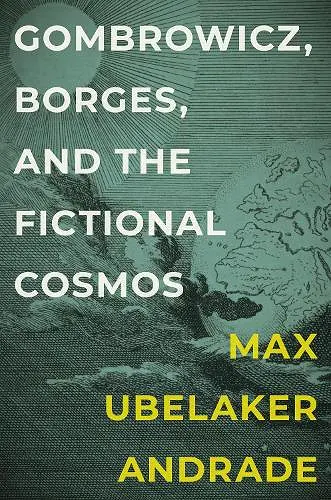
Polish author Witold Gombrowicz's famously chaotic masterpiece, Cosmos, was profoundly influenced by Jorge Luis Borges—particularly by three key stories from Ficciones. Drawing on evidence that Gombrowicz read Ficciones in 1960, as well as handwritten marginalia in Gombrowicz's copy of Adolfo Bioy Casares's La invención de Morel, this groundbreaking study argues that Cosmos responded to Borges's literary transformations of cartography, mathematical combinatorics, and Miguel de Cervantes's Don Quijote. Along the way, it introduces the concept of "immaterial bibliography" to analyze imaginary texts appearing in literary works. Finally, it examines the tension between Borges's explicit racism and the ethical and aesthetic vision suggested by his fiction, revealing how rumor, rebellion, and literary inheritance shaped Gombrowicz's reading of Borges, which in turn influenced the composition of his prizewinning last novel.
Published by Bucknell University Press. Distributed worldwide by Rutgers University Press.
"Gombrowicz and Borges come alive for a new generation of readers in Ubelaker Andrade's learned and astute book. A true delight!" - Alicia Borinsky, author of One-Way Tickets: Writers and the Culture of Exile
"Borges and Gombrowicz famously did not get along during the latter's quarter-century in Buenos Aires, but in this book Ubelaker Andrade shows that there is a secret dialogue with Borges in Gombrowicz's Cosmos, written near the end of the Polish writer's long sojourn in the Argentine capital. He argues that in 1960, when Gombrowicz finally read Ficciones, he then wrote the last of his novels in which he provides a belated response to Borges, one that is quite different from the caricature of him in the earlier Trans-Atlantyk. With attention to Gombrowicz's Argentine diaries and the works he wrote there, Ubelaker Andrade argues that the two writers shared concerns and played with similar topoi (maps, libraries, relationships, rumor). Their ideas and strategies were very different or, as Gombrowicz says late in his life, 'at opposite poles,' but there was a common ground between them. A rich and fascinating book." - Daniel Balderston, author of How Borges Wrote
ISBN: 9781684486144
Dimensions: 229mm x 152mm x 16mm
Weight: 285g
194 pages