Noble Savages
The Olivier Sisters
Format:Paperback
Publisher:Vintage Publishing
Published:6th Aug '20
Should be back in stock very soon
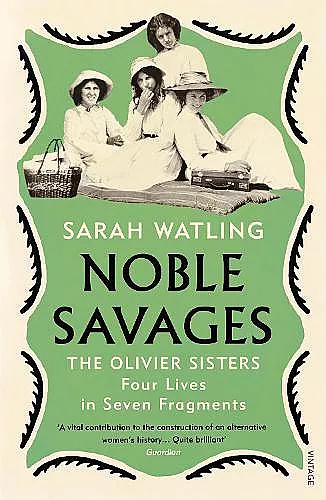
This biography uncovers the intertwined lives of the Olivier sisters, whose remarkable stories reflect the complexities of sisterhood and feminism in the twentieth century. Noble Savages highlights their extraordinary journey.
In Noble Savages, Sarah Watling delves into the lives of the Olivier sisters, four remarkable women who defied societal norms and expectations during their time. From their early years, they were known for their striking beauty, strong wills, and a sense of independence that set them apart. Their lives were intertwined with notable figures such as Rupert Brooke and Virginia Woolf, who both admired and critiqued them in equal measure. This biography offers a nuanced exploration of their experiences, highlighting the complexities of sisterhood and the challenges they faced in a changing world.
The narrative spans a wide array of historical contexts, from colonial Jamaica to the aftermath of two world wars, showcasing how the sisters navigated their personal and collective journeys through significant societal shifts. Watling's meticulous research brings to light the sisters' struggles and triumphs, illustrating the evolving philosophies of feminism and identity throughout the twentieth century. The book not only recounts their stories but also reflects on the ethics and challenges of biographical writing itself.
Noble Savages serves as both a tribute to these extraordinary women and a critical examination of their legacy. By reclaiming their story, Watling invites readers to consider the broader implications of sisterhood, autonomy, and the historical narratives that shape our understanding of women's lives and achievements.
The best group biography of the year – of many years, in fact – is Sarah Watling’s Noble Savages, the story of the four Olivier sisters... Their mother was the model for Tess of the D’Urbevilles, their joint best friend was Rupert Brooke, and they had, said Virginia Woolf, strange glass eyes which they took out at night. But this is not why they are interesting. After feral childhoods in Surrey, where their parents lived in a Fabian utopia, each woman struggled with postwar realities: insanity, grief, poverty, catastrophic marriages. Elegantly structured in “seven fragments”, Watling’s book gives us a riveting drama that begins as pastoral comedy and ends as tragedy. -- Frances Wilson * New Statesman, Books of the Year *
This is the first time [the Olivier sisters] have had a biography to themselves, and a very fine job Sarah Watling makes of it…thoroughly fascinating... This book is interesting on a dozen levels. * Daily Telegraph *
Four remarkable sisters born at the end of the 19th century, and I didn’t know about any of them before reading this utterly absorbing book in which their whole lives are laid before us. Their story has opened my eyes to whole new areas of early 20th-century British life. * Daily Mail *
In this compelling biography Sarah Watling tells [the Olivier sisters’] tale for the first time. It is the story of the end of Victorianism and the birth of the modern age. It is also, grippingly, the story of the early feminist movement, and a vital contribution to the construction of an alternative women’s history… [Watling] is quite brilliant. * Guardian *
A story of four girls rebelling against Edwardian stuffiness is vividly told… in this thoughtful, compassionate biography… I found much to celebrate and admire here. * The Times *
In her highly accomplished first book Sarah Watling aims to follow [the Oliviers'] lives as a way of recovering what still feel like missing aspects of twentieth-century female life ... Watling is excellent on the way that biographers’ zeal for “uncovering” material facts and psychological truths about their subjects is really an attempt to claim authority for what are essentially acts of imagination... This does not mean, though, that Watling is willing to sacrifice the rich, enduring pleasures of biographical storytelling ... Watling deftly uses the Oliviers’ lives to reanimate the kinds of female experience that tend to lie inert inside grander narratives. -- Kathryn Hughes * The New York Review of Books *
If the Bloomsberries lived in squares and loved in triangles, the Olivier sisters lived in tents and loved in Venn diagrams… Sarah Watling’s riveting book… is a noble endeavour and a laudable achievement. * Literary Review *
This marvellous biography… shines a light on these four fascinating women [the Olivier sisters] – and the dramatic, pioneering lives they led. -- Francesca Carington * Tatler *This summer’s best new books and holiday reads* *
Watling vividly conjures up the sisters, but ultimately this is an exploration of the difficulty of knowing anyone truly, and how sisterhood makes it harder still… it renders them inspiring without flattening them into the bland ‘rebel girls’ stereotypes currently in vogue. * Mail on Sunday *
Sarah Watling’s expertly crafted portrait of the lives of the Olivier sisters manages to draw out of the archives not only vital threads of English cultural history but a sense of the risk of new biographical subjects being seen and heard for the first time. Watling is a highly sensitive curator and she handles her subjects with exquisite care, folding them back into the environments which made them and allowing us to visit them there. I read Noble Savages and I was reminded of the thrill of first reading the writings of ethnographer and explorer, Mary Kingsley.
ISBN: 9781784707170
Dimensions: 198mm x 129mm x 25mm
Weight: 287g
416 pages