Translingual Practices in English Language Education in South Asia
Inclusivity and Equity
Shaila Sultana editor Pramod K Sah editor
Format:Paperback
Publisher:Multilingual Matters
Published:10th Mar '26
Should be back in stock very soon
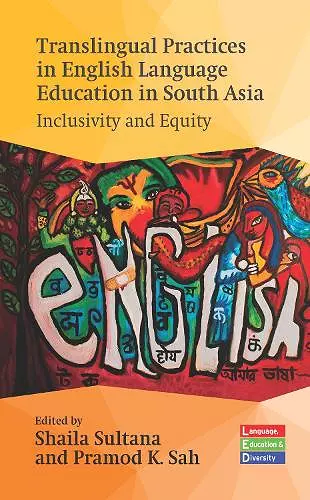
This book presents research from South Asian contexts to explore the feasibility, acceptance and prospects of translingual practices in English language classrooms. It highlights the marginalisation sustained through English language education and persistent monolingual biases and suggests steps to ensure linguistic rights and social justice.
Identifies diverse language uses in sociolinguistically underexplored formal domains of education in South Asia.
This book presents empirical research from a wide range of South Asian contexts, in order to develop critical understandings of the intricate relationships between translingual practices, language education, social justice and equity. The chapters explore the feasibility, acceptance and prospects of translingual practices as meaningful communication and pedagogic practices in South Asian English language classrooms.
The authors identify diverse language uses in sociolinguistically unexplored formal domains of education and address the persistent monolingual biases and ideologies, hegemonic language policies and negative attitudes towards non-standard varieties of English and other languages within these contexts.
The book raises awareness of the marginalisation, violence, intolerance and injustice sustained through English language education in South Asia and suggests steps to ensure linguistic rights, linguistic equity and social justice.
This book is Open Access under a CC BY NC ND license.
This volume is essential reading for TESOL and ELT policymakers, academics and higher education students across the subcontinent and more widely in the field of global multilingual education. It constitutes a key milestone in the move towards more socially just, linguistically equitable and pedagogically effective practices in English language classrooms. * Jason Anderson, University of Warwick, UK *
This timely volume showcases diverse editorial and authorial voices not only from South Asia but many also currently embedded in those contexts, which makes it an invaluable addition to current scholarship. Add to that the deep analyses and insights presented throughout the chapters and you have a must-read book if you wish to truly understand the complex histories and sheer dynamism that South Asian ELT encapsulates. * Rashi Jain, Montgomery College, USA *
This book marks a milestone in the development of language scholarship in Southern epistemologies. Grounded in diverse sociolinguistic contexts in different Asian nation-states, the book seeks to illuminate how concepts such as translanguaging, decoloniality, and bilingualism assume more nuanced forms when they are used in Asian contexts. The nuanced understanding of these terms can also enhance language scholarship in other Global Southern contexts such as South America and Africa. * Sinfree Makoni, Pennsylvania State University, USA *
South Asia boasts a centuries-long history of translingual practices. It is unfortunate that we are forced to rediscover those practices after their suppression and erasure during European colonization. Adopting translingual practices in contemporary educational contexts in the region is a complex exercise that involves creatively applying indigenous communicative practices and language ideologies while critically engaging with changes that have followed the imposition of colonialist institutions and policies. The authors in this book undertake this exercise perceptively, drawing on an intimate knowledge of the educational traditions in diverse communities across South Asia. Scholars in other regions will be motivated to undertake such efforts in their own communities.
* Suresh Canagarajah, The Pennsylvania State University, USA *Finding a volume that captures the richness of South Asia’s linguistic landscapes is rare. Translingual Practices in English Language Education in South Asia: Inclusivity and Equity illustrates how teachers, students, and institutions navigate multilingual realities within colonial and nationalist contexts, along with diverse cultural practices and forms of linguistic activism.
Its contributors draw on empirical research, historical and contemporary policy, classroom pedagogy, assessment, and teacher practices throughout the region. They reveal both educators' creativity and the structural barriers that hinder transformative work. The book also emphasizes that translanguaging remains largely unaddressed in national policies and challenges the field to broaden what counts as decolonial language work, advocating for research that considers local classrooms as well as larger power structures.
By synthesizing these insights, the volume demonstrates the potential of multilingual approaches to promote equity, decolonize English language education, and advance linguistic justice across classrooms, institutions, and communities. It is essential reading for anyone seeking to understand and transform language education in South Asia.
* Hina Ashraf, Georgetown University, USA *ISBN: 9781800418448
Dimensions: 234mm x 156mm x 14mm
Weight: 400g
264 pages