From Hydrology to Hydroarchaeology in the Ancient Mediterranean
An Interdisciplinary Approach
Giovanni Polizzi editor Sophie Bouffier editor Vincent Ollivier editor
Format:Paperback
Publisher:Archaeopress
Published:27th Oct '22
Should be back in stock very soon
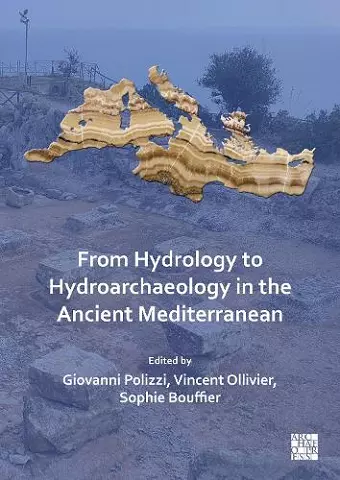
From Hydrology to Hydroarchaeology in the Ancient Mediterranean: An interdisciplinary approach is devoted to the study of water management in ancient cities. It compares the approaches and methods adopted by researchers from different disciplinary sectors to identify the water conditions of past societies and to highlight the measures they have taken to adapt to their water resources. Deriving from an interdisciplinary meeting held in Aix-en-Provence (Mediterranean House of Human Sciences) in 2019, it brings together seven articles that present the innovative results of collaborations between archaeologists and environmental scientists, geologists, geomorphologists, and climatologists in particular. After an introduction that situates the discussions conducted in Aix-en-Provence within the framework of the Watertraces project, funded by the A*Midex foundation (Aix-Marseille University), most of the articles focus on the Sicilian situation. An initial synthesis covers all aspects of the question, followed by four case studies ranging from the 4th century BC to the 1st century AD. Case studies on Agrigento, Termini Imerese/Thermai Himerenses, Alesa/Halaesa, Solunte and Tyndaris are presented. The focus then moves to southern Italy (the Terme di Baia), and to Aegean Greece (the sanctuary at Delphi).
‘In conclusion, the volume is spot on in terms of topic, as material and cultural uses of water have co-shaped water systems, emphasizing the intrinsic proximity of natural and human worlds. Furthermore, in a world of human agents, the water infrastructure is more often the relevant materiality, with its object-like properties: it has sides (back, front, downside, inside) that typically block each other’s view. The archaeological record is full of these infrastructures, as the case studies in the book under review show. However, as much as landscapes are not static backgrounds, water infrastructure is closely related to dynamics. Infrastructure affects rhythm(s) of the substance water through space and time. This change of movement is not necessarily accepted by water and not necessarily useful for actors depending on the water, like fish and other water-dependent agents. As such, whereas the book by Polizzi and colleagues is timely to address the interplay of human(s), environment(s) and water(s), and provides very interesting data and details, it stays too far away from the existing scholarly work on how to conceptualize and study the dynamics of the interplays.’ - Maurits W. Ertsen (2024): BIBLIOTHECA ORIENTALIS LXXXI N° 5-6
ISBN: 9781803273747
Dimensions: 290mm x 205mm x 7mm
Weight: 1110g
166 pages