In Search of the Blue Flower
Alexander Hamilton and the Art of Cyanotype
Format:Hardback
Publisher:Studies in Photography
Published:30th Apr '23
Should be back in stock very soon
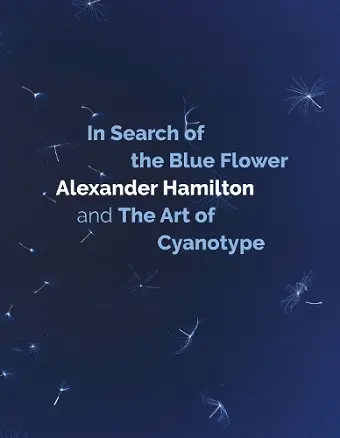
Scottish photographic artist Alexander Hamilton presents his early formative years, sharing the way his engagement with the cyanotype process has informed his art practice, from his time at Edinburgh College of Art, to his program of exhibitions and residencies, through to his work within the field of public arts. This personal history is combined with essays by academics, scholars and curators who engage with the intellectual roots of his work and practice. A comprehensive selection of Hamilton’s photography, including his unique plant-based cyanotypes, completes this beautiful book.
Deep blue is the thread running through this unique book, which is a compelling compilation: an artist’s colorful biography, a rich collection of thought-provoking essays and a gallery of remarkably detailed contemplative cyanotype photograms. Its most riveting aspect is Hamilton’s ability to integrate stark opposites in his life and artwork. Always true to his profound connection to nature and the Scottish landscape, Alexander Hamilton was shaped by the artistic rebellions of the 1960s. He reveled in this exuberant renewal of energy, working in vibrant cities like New York, while remaining calm and connected to the land. His engagement in social and collaborative work did not stop him developing an idiosyncratic style. His astounding cyanotypes were true to the origins of the process, while ground-breaking in their delicate details and use of the plant’s own colors. The high-quality matt paper of the picture section of this edition allows Hamilton’s photograms to exude all their supple beauty. * Annette Golaz, author of Cyanotype Toning: Using Botanicals to Tone Blueprints Naturally *
In Search of the Blue Flower, Alexander Hamilton and the Art of Cyanotype is a must-have book for anyone interested in the cyanotype process. Since Anna Atkins created the very first photo-illustrated book of cyanotype botanicals (British Algae: Cyanotype Impressions 1843-1853), cyanotype has become the most practiced alternative process in the world, most likely because of cyanotype’s ease of use, low cost, and non-toxic chemistry. To this day, the most common cyanotype practice also remains the botanical photogram—albeit with a few new twists such as the wet cyanotype, cyanolumens, and toning. There are wonderful essays in the back of the book discussing cyanotype and Hamilton’s work. I found myself most intrigued by Hamilton’s fifty-year engagement with the botanical photogram which he has taken to a conceptual level beyond most of what we see today. The book—beautifully illustrated on velvety paper—is a catalogue raisonné of Hamilton’s works, and a clear discussion of his artistic trajectory. He talks about his early childhood influences, and his tumultuous art school days where he was pushing the boundaries of traditional modes of art. This was followed by living in various countries including his native Scotland where he engaged with the indigenous botanicals in each place. During this time he solidified his artistic path as one of a respectful collaboration with nature and place. In his prints, nature leaves its mark. I appreciated reading about such things as Hamilton’s dedication, his sense of place, his tenuous existence with the commercialization of art, his eventual arrival to a point of comfort with exhibition. This book is better than an exhibition. The reader gets to engage with Hamilton’s work and life in an intimate way. In Search of the Blue Flower should serve as encouragement for any artist navigating their own trajectory, full of twists and bumps, where living life true to one’s artistic core becomes more important than the art created as an outcome. * Christina Z. Anderson, Professor of Photography *
‘In Search of the Blue Flower’ foregrounds Alexander Hamilton’s wonderful cyanotypes. The imagery is complemented by a self-penned essay that details his remarkable history as an artist, and the intellectual roots of his work. A number of related essays by academics, scholars and curators completes this memorable publication. A rightful tribute to an exceptional artist. * Dr Tom Normand HRSA- Honorary Research Fellow- School of Art History- University of St Andrews *
ISBN: 9781838382261
Dimensions: unknown
Weight: unknown
168 pages