Playfulness, Animals and Learning in Early Medieval Texts
Format:Hardback
Publisher:Boydell & Brewer Ltd
Publishing:8th Dec '26
£85.00
This title is due to be published on 8th December, and will be despatched as soon as possible.
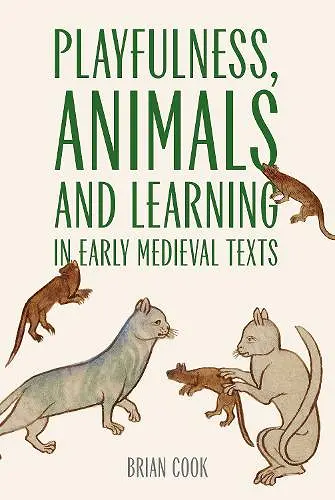
Examines literary play as a lens for rethinking the human-animal boundary in early medieval culture - from Bede and Beowulf to Augustine of Hippo and Isidore of Seville. The frog goes "croak." The crow goes "caw." These two sentences might easily be found in a modern children's book, written in colourful letters next to cute cartoon animals. We should be forgiven, then, if we did not immediately think of Priscian's Institutes of Grammar, where this is the first lesson in one of early medieval Europe's most important grammar textbooks. This book offers a fresh perspective on early medieval literary culture by exploring the intersection between play studies and animal studies. It reassesses the relationship between human and animal, revealing the slippery boundary between serious and frivolous play while also mapping the medieval vocabulary used to distinguish between them. From Augustine of Hippo to Ælfric Bata, Isidore of Seville to Bede, and the Old Irish Auraicept na nÉces to Beowulf, literary play serves as the vehicle through which medieval readers explored their own relationships with the world around them.
ISBN: 9781843848400
Dimensions: unknown
Weight: unknown
218 pages