Reading and Rhetoric in Montaigne and Shakespeare
Format:Hardback
Publisher:Bloomsbury Publishing PLC
Published:1st Nov '10
Currently unavailable, and unfortunately no date known when it will be back
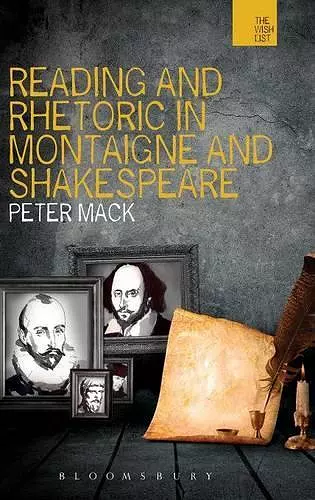
Shakespeare's plays and Montaigne's Essais are always present in lists of the world's fifty great books and both are crucial components of set reading lists for school and university courses in English and French literature By far the most sustained account of how these two great writers wrote and how they conveyed their reading to their audiences Draws on the extensive literature of both writers and goes far beyond the limited literature that compares their work which generally concentrates on when Shakespeare first read Montaigne
Shakespeare and Montaigne are the English and French writers of the sixteenth century who have the most to say to modern readers. This fascinating and rigorous book explores the relationship between the work of these great writers in the light of their rhetorical training.Shakespare and Montaigne are the English and French writers of the sixteenth century who have the most to say to modern readers. Shakespeare certainly drew on Montaigne's essay 'On Cannibals' in writing The Tempest and debates have raged amongst scholars about the playwright's obligations to Montaigne in passages from earlier plays including Hamlet, King Lear and Measure for Measure. Peter Mack argues that rather than continuing the undeterminable quarrel about how early in his career Shakespeare came to Montaigne, we should focus on the similar techniques they apply to shared sources. Grammar school education in the sixteenth century placed a special emphasis on reading classical texts in order to reuse both the ideas and the rhetoric. This book examines the ways in which Montaigne and Shakespeare used their reading and argued with it to create something new. It is the most sustained account available of the similarities and differences between these two great writers, casting light on their ethical and philosophical views and on how these were conveyed to their audience.
ISBN: 9781849660617
Dimensions: 234mm x 156mm x 21mm
Weight: 498g
224 pages