Feet in Chains
Kate Roberts author Katie Gramich translator
Format:Paperback
Publisher:Parthian Books
Published:26th May '20
Should be back in stock very soon
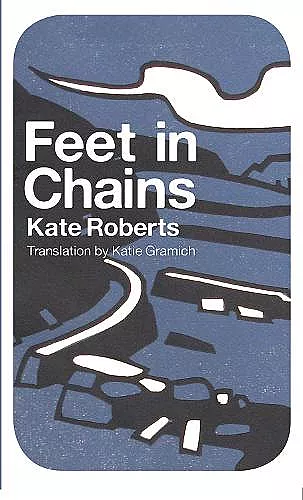
Snowdonia, 1880, and Jane Gruffydd is a newcomer to the district, dressed to the nines and almost fainting in the heat of the interminable prayer meeting out on the mountainside... In the pages of this classic 1936 novel, we see the passionate and headstrong Jane grow up and grow old, struggling to bring up a family of six children on the pittance earned by her slate-quarrying husband, Ifan. Spanning the next forty years, the novel traces the contours not only of one vividly evoked Welsh family but of a nation coming to self-consciousness; it begins in the heyday of Methodist fervour and ends in the carnage and disillusionment of the First World War. Through it all, Jane survives, the centre of her world and the inspiration for her children who will grow up determined to change the conditions of these poor people’s lives, to release them forever from their chains.
This new translation, launched at the National Eisteddfod, of a major work by Wales’s premiere female novelist admirably conveys Kate Roberts’s clear, spare, realistic style, her unflinching honesty and her avoidance of melodrama, cliché and propaganda (not always avoided by her male contemporaries). Feet in Chains is rooted in her memories of her childhood in Caernarfonshire as the child of a slatequarryman and smallholder. Owen, the clever child, wins scholarships, goes to Bangor University and becomes a teacher. The novel follows Owen’s mother, Jane, from a young married woman in 1880, through motherhood and constant struggles to ‘make ends meet’, to the bitter losses of the First World War. It depicts very clearly the tensions of family life – ties of love and obligation – felt in very variable degrees by different members. Although this is played out on a small stage, the author is so clear-sighted in her comments that it is also universally recognisable and applicable too to wider issues of loyalty and nationhood. The story begins with an interminable prayer meeting but the most important contribution of the chapel to the characters’ lives (and perhaps Kate’s) was literary rather than spiritual. We do not find the spiritual struggles Menna Gallie depicts in her comparable novels such as Strike for a Kingdom. While the novelist and occasionally one of her characters is aware of the subtle beauty of the North Walian landscape, she is brutally clear that it is a desperately harsh place to make a living and the inhabitants have little time to enjoy the view - except, most poignantly, when they are leaving it, possibly for ever. There is a helpful introduction which places the novel not only in the context of the author’s childhood but also in her 1930s experiences of poverty in the south. There are also concluding notes on her use of fictional Welsh place names and on details of historical and linguistic interest. The novel is an unsentimental treatment of lives ground down by hardship and petty injustice. It is in many ways a grim read, but her depiction of the individual characters, their perceptions and reactions make it a very rewarding one. -- Caroline Clark @ www.gwales.com
ISBN: 9781908069566
Dimensions: unknown
Weight: unknown
226 pages