Creating a Neuroinclusive Classroom
A Practical Guide
Format:Paperback
Publisher:Trotman Indigo Publishing Limited
Published:6th Oct '26
Should be back in stock very soon
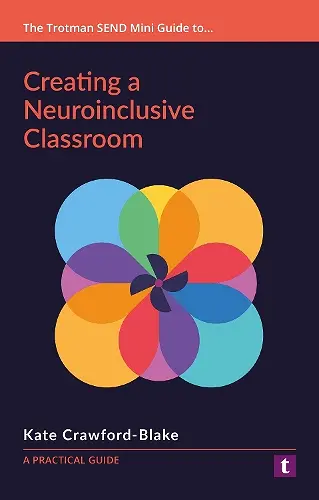
A clear and practical guide that helps SENCos and classroom teachers deepen their understanding of neurodiversity and create classrooms where every learner can thrive.
This practical, accessible guide offers clear, realistic strategies to help school staff better understand how different neurodivergences shape learning, communication and behaviour - and what to do about it.
"Combining research-informed guidance with practical, accessible strategies, Creating a Neuroinclusive Classroom: A Practical Guide is a valuable addition to any educational bookshelf. It is a resource that staff will return to time and again as they strive to create inclusive environments where every child, and every member of the school community, can thrive."
Lydia Board, Headteacher and SENDCo
This practical guide offers clear, concise and realistic guidance for creating genuinely neuroinclusive learning environments.
Accessible, realistic and packed with practical strategies, Kate Crawford-Blake, an experienced educational professional, explores a range of common neurodivergences and shows how these can shape children’s learning, communication and behaviour. With straightforward explanations and actionable adaptations, she helps busy school staff reflect on their current practice and make meaningful changes that support a wide variety of neurotypes.
Drawing on her extensive work with schools, the author tackles common misconceptions, shifting terminology, stretched CPD time and the increasing challenge of meeting pupils’ needs in crowded classrooms.
Readers will learn how to:
- Identify how different neurodivergences present in school and what they mean for daily teaching.
- Make simple, sustainable adjustments that immediately improve pupils’ experience and engagement.
- Build a more neuroinclusive culture that helps more learners reach their potential.
This outstanding guide will help SENCos and classroom teachers deepen their understanding of neurodiversity and create classrooms where every learner can thrive.
"Creating a Neuroinclusive Classroom: A Practical Guide does exactly what its title promises. It provides practical, accessible advice that helps to alleviate those concerns and supports the creation of a more welcoming and inclusive learning environments without requiring drastic changes or significant financial investment. As a primary headteacher with over ten years' experience, I found this book refreshingly practical, offering immediate strategies that staff can implement to improve outcomes and experiences for pupils across the school. Kate thoughtfully explores the apparent rise in diagnoses of neurodivergent conditions and the perceptions that labels can sometimes bring. More importantly, she helps readers develop a deeper understanding of different forms of neurodivergence and the lived experiences of children and young people navigating school environments. The book supports educators in understanding how environmental factors can influence behaviour, enabling them to identify and respond more effectively to pupils' needs. The chapters are interspersed with reflective prompts, practical activities and key takeaways that encourage meaningful reflection and future planning. This structure allows readers to pause, consider their own practice and identify realistic changes that can be implemented straight away. The guidance throughout is clearly rooted in both research and extensive professional experience, providing practical "pick-up-and-go" strategies that educators can apply immediately. For those wishing to explore the evidence base further, Kate carefully signposts the research that informs her recommendations, making the book an excellent resource for aspiring, trainee and experienced SENDCos alike. What stands out most is the book's non-judgemental and person-centred approach. It promotes collaboration between school staff, parents, and children and young people, recognising that successful inclusion is built on strong partnerships. Ultimately, it supports the shared goal of ensuring that every child can access the high-quality teaching and learning experiences they deserve. Importantly, the book also reminds us that inclusion must extend beyond pupils. Many of the strategies discussed can be adapted to support school staff, including those with identified or unidentified needs. This broader perspective reinforces the idea that truly inclusive practice benefits everyone within a school community. This book has wide-ranging applications. It is an invaluable resource for individual professional development, whether you are a school leader, SENDCo, teacher or teaching assistant. Equally, its content could be used to structure staff training sessions and support whole-school development. It also provides a useful framework for productive conversations with parents about their child's strengths, needs and the support they receive in school. Combining research-informed guidance with practical, accessible strategies, Creating a Neuroinclusive Classroom: A Practical Guide is a valuable addition to any educational bookshelf. It is a resource that staff will return to time and again as they strive to create inclusive environments where every child, and every member of the school community, can thrive." Lydia Board, Headteacher, BA (Hons), PGCE, SENDCo
ISBN: 9781911759317
Dimensions: unknown
Weight: unknown
128 pages