Picasso: Tete-a-tete
Michael Cary author Larry Gagosian author
Format:Hardback
Publisher:Gagosian/Rizzoli
Published:14th Oct '25
Currently unavailable, our supplier has not provided us a restock date
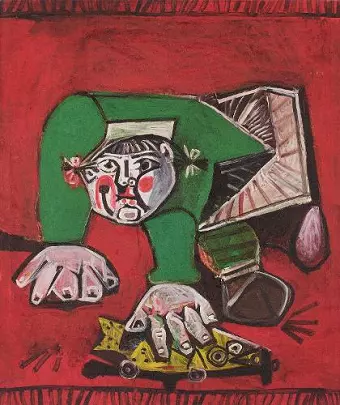
This book was published on the occasion of the exhibition Picasso: Tête-à-Tête at Gagosian, 980 Madison Avenue, New York, presented in collaboration with the artist’s daughter Paloma Picasso.
Drawn largely from Picasso’s estate, the book features over sixty rarely seen paintings, sculptures, and drawings from the full span of his career, from 1896 to 1972. Inspired by the achronological approach that Picasso took when installing his first retrospective in 1932, works from across decades are placed in conversation, encouraging viewers to discover new personal connections and continuities.
Fully illustrated with color plates, including extensive installation photography, the catalogue reproduces all the works in the exhibition alongside details and archival images of the artist and his studios. It includes an introduction by Larry Gagosian; a conversation between Paloma Picasso and artist Peter Doig addressing the inspiration behind the exhibition and recounting her father’s creative life; “Hanging with Picasso,” an essay by Michael Cary reflecting on the diversity of the artist’s practice; and a translation of a 1932 conversation between Picasso and E. Tériade. The cloth hardcover is housed in a slipcase featuring the painting Fillette jouant avec une voiture (Paloma fond rouge) (1951) and the sculpture Petite fille sautant à la corde (1950).
"In fact, when the painter mounted his own retrospective in Paris in 1932, he hung the works not according to chronology but jumbled together. He wanted to give visitors “glimpses into the personal connections he saw in his own creations,” writes the gallerist Larry Gagosian in the introduction to “Picasso: Tête-À-Tète” (Rizzoli, 212 pages, $100). The volume, produced in collaboration with the artist’s daughter Paloma, takes inspiration from the 1932 show, pairing objects in a manner that leaps between decades, styles and media to capture the artist’s flitting energies. For example, the toothy and geometric 1931 painting “Le Baiser” (“The Kiss”) faces “Le Baiser II” from 1969, a more sensuous iteration of the theme, rendered in swirling grays and off-whites. As Ms. Picasso puts it: “There’s a lot of chatter going on between these works—like we’re eavesdropping at a party.'" — THE WALL STREET JOURNAL.
ISBN: 9781951449940
Dimensions: unknown
Weight: unknown
197 pages