Konrad Zuse's Early Computers
The Quest for the Computer in Germany
Format:Paperback
Publisher:Springer International Publishing AG
Published:14th Oct '24
Should be back in stock very soon
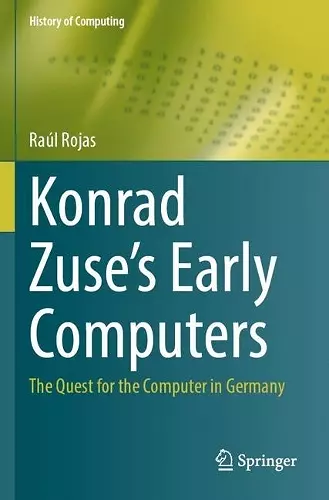
This book describes the historical development of the architectures of the first computers built by the German inventor Konrad Zuse in Berlin between 1936 and 1945. Zuse's machines are historically important because they anticipated many features of modern computers.
Specifically, these include the separation of processor and memory, the ability to compute with floating-point numbers, a hardware architecture based on microprogramming of the instruction set, and a layered design with a high-level programming language on top. In fact, Zuse's early computers are closer to modern computers than the Harvard Mark I or ENIAC, two other contenders for the title of "world's first computer." The theoretical program first conceived by Zuse in 1936/37 was fulfilled with a series of machines built before and during World War II: the Z1, Z2, Z3, and Z4. Separate chapters deal with the architecture of each computer, culminating in the description of Plankalkül, the first proposal for a high-level programming language.Students of the sciences and practitioners of computer science should have no trouble following the material. The concise introductory summary sets the reader on the historical path to retrace this remarkable intellectual adventure.
“This book explicitly aims to pay tribute to Zuse’s wide-ranging merits. … All chapters (some translated from German) are meant to be read as stand-alone pieces, tied together by an instructive preface. The book is intended to address ‘curious and adventurous’ students and practitioners of computer sciences, yet it can also inspire readers from historical disciplines. Compiling thirty years of research, however, this book documents Rojas’s remarkable, long-lasting efforts to keep the memory of Zuse alive.” (Michael Homberg, Technology and Culture, Vol. 66 (1), January, 2025)
ISBN: 9783031398780
Dimensions: unknown
Weight: unknown
229 pages