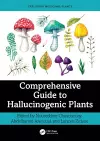
Comprehensive Guide to Hallucinogenic Plants
3 contributors - Hardback
£210.00
Find out more
Noureddine Chaachouay is a Moroccan ethnopharmacologist and botanist and is presently a member of the faculty of the École Supérieure de l’Éducation et formation de Berrechid, Université Hassan First, Settat, Morocco. He is an academic whose path was characterized by a doctorate in Plant Science in 2020 at the Faculty of Sciences of Ibn Tofail University, Kénitra. He earned a Master’s
degree in Climate Change, Adaptation, and Sustainable Development and a Bachelor’s degree in Life Sciences in 2016 and 2013, respectively, in addition to several pedagogical and technical diplomas in 2013. These credentials form the basis of his interdisciplinary research in plant science and environmental studies. His doctoral dissertation research, entitled “Floristic and Ethnomedicinal Study of Aromatic and Medicinal Plants in the Rif Region (Northern Morocco),” is an extensive study on the biodiversity and traditional applications of the local flora. The work presents the experience of his
skills in botany and phytotherapy. His career has focused on the taxonomy of medicinal plants,
ethnobotany, and phytotherapy, having published several scholarly articles, book chapters, and the
edited book, The Comprehensive Guide to Hallucinogenic Plants. These findings are manifested in
his research work, which was devoted to both basic and applied sciences. He is an innovative and
community‑based researcher who has sought the development of plant‑based therapeutic knowledge
in both theoretical and practical setups. He is also engaged in peer review and editorial activity,
thus supporting scientific rigor and encouraging scholarly communication. His achievements have
been recognized with some significant awards. In 2023, Hassan First University honored him as the
Young Researcher of the Year for an outstanding piece of scientific research. A year later, he was
awarded the Young Scientist Award (Environment) for his work in plant study and biotechnology,
given at a worldwide conference organized by Aligarh Muslim University, India. These awards
highlight his critical contribution to the botanical sciences. In addition to his research interests,
he is greatly engaged in mentoring students and enhancing sustainable development. He teaches
botany, ethnopharmacology, and climate change to prepare the upcoming generation of individuals
dedicated to environmental protection.
Ouafae Benkhnigue is a distinguished Moroccan botanist and ethnobotanist affiliated with the Department of Botany and Plant Ecology at the Scientific Institute, Mohammed V University of Rabat (Morocco). She is a member of the Flora of Morocco research team, where she actively contributes to the revision of the vascular flora of Morocco, the systematic and taxonomic updating of taxa
in the National Herbarium (RAB), the restoration of herbarium specimens, and the enrichment of the collection through the integration of rare and endemic species. She also serves on the Editorial Committee of the Scientific Institute’s publications (Life Sciences section) and regularly participates in peer review and scientific writing activities. Her research spans a wide range of disciplines, including taxonomy, systematics, plant ecology, floristics, ethnobotany, ethnopharmacology, phytochemistry, remote sensing, biotechnology, and environmental sciences. She actively participates in the scientific valorization of Moroccan aromatic and medicinal flora, conducting studies on its diversity, traditional use, and active constituents. She is a member of the Organization for the Phyto‑Taxonomic Investigation of the Mediterranean Area (OPTIMA) in other nations. Her research paradigm is based on the interdependence of science, cultural heritage, and sustainable development, and therefore, it promotes new approaches to protect biodiversity and manage the environment, often in collaborative efforts with local communities. She has written and lectured extensively on plant diversity and ecology, conservation intervention, ecological management, and the importance of aromatic and medicinal plants, both nationally and internationally. She is engaged in active research and development of biodiversity conservation and sustainable development in Morocco and the Mediterranean region in general through her scientific and collaborative work.
Lahcen Zidane is a botanist, ecologist, and professor of higher education in the Faculty of Biology at Ibn Tofail University in Kénitra, Morocco, where he has been teaching and conducting research since 1991. His scientific studies focus mainly on floristics, flora ecology, ethnobotany, and ethnopharmacology, with a special emphasis on how botanical knowledge can be used in agriculture,
biotechnology, and the valorization of the medicinal and aromatic plant Moroccan flora. He is also recognized as an authority in environmental sciences, particularly regarding the implications of climate change on the environment and the biogeographical influence of plant taxa, thereby contributing to the
understanding of ecological dynamics and informing approaches to conserving biodiversity. Being
a true believer of scientific training, he has overseen more than 20 doctoral students, all of whom
have successfully defended dissertations in various fields such as ethnobotany, ethnopharmacology,
floristics, plant ecology, and ecotourism, to name a few. This demonstrates his significant role
in molding new generations of scholars and in the spread of botanical and ecological knowledge.
He also leads a national program aimed at the inventories and conservation of plant species in
Morocco; other efforts include georeferencing botanical biodiversity, discovering endangered taxa,
and advocating for their conservation. Due to his contributions to science and pedagogy, he plays a
central role in issues of sustainable development, biodiversity conservation, and the advancement of
environmental sciences in Morocco.